Category: Placements

  • Robert Mann – POST Policy Internship

    Robert Mann – POST Policy Internship

    Robert Mann recently undertook a three-month research fellowship with the Parliamentary Office of Science and Technology (POST). Here he outlines his experience and why you should consider applying too:

    I have recently completed a three-month fellowship at the Parliamentary Office of Science and Technology (POST), as part of my PhD. This opportunity was made available through the UK Research and Innovation policy internship scheme, supported by the Economic and Social Research Council.

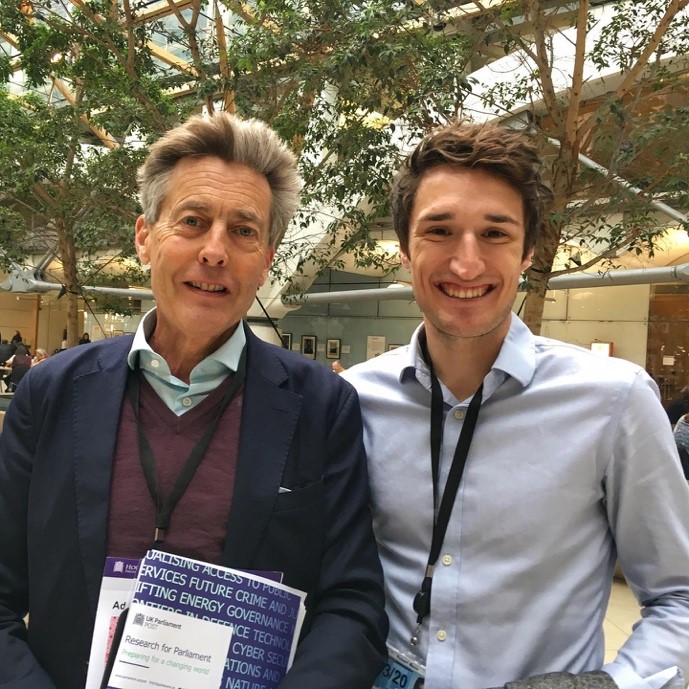
    Robert Mann Post Fellowship Photo

    POST is Parliament’s in-house source of independent, balanced and accessible analysis of public-policy issues related to science and technology. As a bicameral office, POST works on behalf of both the House of Commons and the House of Lords. Having been founded in 1989, POST largely focuses on writing four-page briefings, known as POSTnotes. These briefings are impartial, non-partisan, and peer reviewed. During my fellowship, I was tasked with writing a POSTnote on the topic of ‘non-custodial sentences’.


    As my POSTnote is unlikely to be published soon, largely due to the General Election, I thought that I would attempt to convey three reasons why you should consider applying to undertake a fellowship at POST during your PhD:


    • You will be forced out of your comfort zone: The process of writing a POSTnote is challenging, in the best possible way. Within three-months, you are required to scope the literature; contact and arrange interviews with topic experts (including academics, third sector organisations and Government departments), condense this information into a POSTnote, before amending this work according to internal and external review comments. The difficult part of this is that your POSTnote topic does not always relate to your PhD research. Therefore, you are required to learn about a new topic and work at a pace that allows you to maintain balance and accuracy in your written work, without feeling too much like an impostor. Although this task can seem somewhat unsurmountable, it reinforces good practice for your PhD work, such as being able to manage a demanding workload and assessing the merits of research evidence. 

    • You get to work on behalf of Parliament: One of the more obvious reasons to apply for a Fellowship at POST is the opportunity to work on behalf of Parliament. In the first few weeks this will be represented by your unique position of being able to watch political debate, quench your thirst at one of the Palace of Westminster bars, and start playing a game of MP “I Spy”. Most POST Fellows try to arrange a meeting with their local MP during their time in Westminster too. As shown in the photo, I was able to meet Ben Bradshaw (MP for Exeter) at Portcullis House.  Alongside this access, working on behalf of Parliament comes with the responsibility of making sure that the POSTnote is fully representative of the given topic area. As the initial target audience of a POSTnote is MPs and Peers, you need to be confident that the experts that were interviewed largely support the final document and agree that it as an accurate portrayal of the topic area. Much like having to respond to reviewer comments when submitting a journal article, the POSTnote is subject to peer-review from the majority of these experts. Therefore, amending the POSTnote according to this review process is the most demanding elements of the Fellowship. Regardless, it definitely improves the final output and develops your ability to maintain an impartial writing style.     

    • Your output sits at the interface between research and policy: As a PhD student, it is typical to become academically pigeonholed. After three or four years of very specific research, you hope to come out the other side of the process with research that can be used to inform policy and develop other types of research impact. On the contrary, undertaking an internship at POST allows you to work directly at the interface between research and policy. The output of which – the POSTnote – is used to inform political debate around the topic, potentially leading to policy changes. Due to the way that topics are chosen by POST (i.e. decided by a committee that includes members of both the House of Commons and House of Lords), the work that you conduct will always be of current interest to MPs and Peers. This can either be in response to certain events, such as the recent rise in knife crime, or more of a ‘horizon scanning’ activity, such as identifying the potential challenges of an increased use of wind power in the UK. This puts you in a unique position and one that teaches you a lot about how Parliament and Government uses research to influence its policy agenda. In turn, this experience can be used to develop your own knowledge about how to best use your PhD research to inform the research-policy interface.

    I hope that these points have given some insight into my time at POST and encourage you to apply too. While my time at POST was demanding, it was also nothing but rewarding. If you are considering applying yourself, don’t hesitate to get in contact with me.   

    Robert Mann is a SWDTP Health and Wellbeing PhD candidate at the University of Exeter. You can read more about his research on our Health and Wellbeing Student Profile page.

  • Alisha Tuladhar Placement- The Innovation Beehive

    Back in the summer, Alisha Tuladhar had the opportunity to undertake a placement with The Innovation Beehive, a consultancy firm based in Cirencester. We asked Alisha a few questions about her placement and what she gained from it:

    Please give a summary of the placement and the work/activities you undertook.

    “My placement at The Innovation Beehive comprised of a range of activities. I attended various workshops, talks and presentations both internally and externally with the firms’ clients, for example: Two-days-Innovation Bootcamp Workshop at a client’s Head-Office in London, also had the opportunity to attend the Retail Week at Gloucester, attended several networking sessions in the Growth Hub and was part of the community on site.”

    Did the placement meet your original objectives and expectations? What were the tangible outputs or outcomes? Where there any unexpected outcomes or opportunities arising from the placement?

    “Yes, the placement met my original objectives and expectations. I initially had two major expectations: assisting the Consultant Head, on projects and using my research skills to help with the firms’ activities. I had expected my main job to be understanding the clients’ needs, analyse them and propose solutions that are customer-centric, technologically feasible and economically sound.

    These expectations were not only met, but in fact, surpassed. Since I was not only involved in client facing projects but also in the development of an internal training material for a large multi-national firm, it was a humbling experience for me to be working amongst an extremely knowledgeable team of consultants. This allowed me to gain an insight on how training materials were created and eventually enrolled in large MNCs.

    Moreover, again unexpectedly, I also got the opportunity to go to various events: some in London, some in Gloucester and was also invited to the Polo Club for a team outing. They were all tremendously valuable networking experiences.”

    How has the placement developed your insight into working with non-academic partners and the benefits and/or challenges of collaboration?

    “Indeed, there are a few differences whilst working with a non-academic partner. The first major difference was that the non-academic sector works in a pragmatic manner and is highly outcome-driven, rather than novelty-driven. In a PhD, we are often seeking for contribution to knowledge or are often
    truth-driven. Whereas, in a non-academic setting, it is more about outcomes and getting things done, rather than spending too much time on the foundational knowledge/ literature review.

    Second difference was the fact that there was very limited time allocated for research tasks. I think whilst doing a PhD or writing papers, the research component is lengthy and a time-consuming process, however with non-academic partners, the deadlines are stricter and tighter. There isn’t much time allocated for a deep-dive research. One needs to be extremely fast and proficient at their tasks.

    And the final difference is the number of stakeholders present.  I personally felt that whilst doing a PhD, its more about your supervisory team, which would be around 2-3, however, whilst during the placement, I was working with a larger team and had a lot of different moving parts. For example, in order to organize one event, there are clients, printing presses, designers, website, marketing communications hence it is more of a team effort with a smooth communication requirement. I personally found that in a PhD there aren’t too many stakeholders.”

    Has the experience of doing the placement made you think about the potential or the impact of your research differently? If so, how?

    “My experience at The Innovation Beehive has definitely shaped my thinking to be more wary of how my research might be applied, what value it brings to UK businesses. More specifically, I have realised that
    there is a lot of good research being done and published in Management Journals, however not many are read or known to business executives. I think the way forward needs to be more inclusive whereby the government, academia and businesses not only have access to research but also are conversing and sharing knowledge with each other. One way to ensure research impact is to publish in Open- Journals perhaps, this is something I personally will aim to do.”

    Are there opportunities for further collaboration with the organisation either for yourself, or for other students, in the future?

    “Yes, I think The Innovation Beehive team and founder, Mok, is very supportive towards students and the academic sector.
    In fact, Joe, the Innovation Director of the firm has already come to the University twice to record three academics for their Podcast. Hence, I think there is definitely more room for collaboration.”

    What advice would you give to a fellow student who is considering undertaking a placement?

    “My advice to a fellow placement student would be “listen, learn and be proactive”. I truly believe in the salience of being curious, asking the right questions, and making sure you are gaining the most of everything that your placement has to offer. Placement is a great opportunity to learn but you will only learn once you ask. So be courageous, be proactive and do your best.”