After being awarded Overseas Institutional Visit funding, I was afforded the opportunity to work at the Action in Complex Environments Laboratory (ACELab) at the University of Alberta (Edmonton, Canada).
With my PhD project looking at movement-related difficulties in Autism Spectrum Disorder (ASD), much of my research involves examining how different sensorimotor networks (e.g., the brain, visual and motor systems) link together during actions. Such investigation demands the use of innovative scientific equipment, such as mobile eye-tracking and motion capture technology.
Therefore, I teamed up with the world-leading researchers at ACELab, who specialise in developing novel measurement tools and movement analysis techniques. Here, through collaborating with experts in kinesiology, neuroscience, psychology and computer science, I was able to explore and experiment with new, innovative analysis methods that could be employed in my research protocols. Looking forward, I will continue to collaborate with ACELab in his upcoming studies, where I will look to apply these new movement analysis tools into my novel and noteworthy line of interdisciplinary research.
However, my trip to Canada was not confined to methodological development purposes. Instead, the visit allowed me to discuss ideas and share my own project with a wider international audience. Specifically, in addition to my collaborative efforts at ACELab, I was able to visit the Centre for Vision Research (University of Toronto, Ontario) and the Bionic Limbs for Improved Natural Control Lab (Division of Physical Medicine and Rehabilitation, Alberta), who both offered valuable insight from their own interdisciplinary domains.
Furthermore, I was able to disseminate findings from my own research, through presenting preliminary PhD work at a Canadian Association for Neuroscience satellite symposium and at the International Conference of Predictive Vision. It is hoped that the diverse range of discussions and networking experiences obtained on this trip will propel me towards exciting collaboration opportunities in the future, both during my PhD and beyond.
Overall, my research trip in Canada was a perfect balance of networking, skill development and travelling experiences. I could not recommend it enough to other students considering their own international collaboration opportunities.
Tom Arthur Health and Wellbeing, University of Exeter
For more information on OIV funding, download our OIV Guidance notes
As a Sport and Health Sciences PhD candidate, my research is concerned with injury and illness in adolescent athletes, with a specific focus on distance running. In March of this year I had the opportunity to undertake an 11-week Overseas Institutional Visit (OIV) at the Oslo Sports Trauma Research Centre (OSTRC), based at the Norwegian School of Sport Sciences. The OSTRC is a world-leading research centre with the aim of preventing injuries and other health problems in sports through research on risk-factors, injury mechanisms, and prevention methods. The goals of my visit were to develop data management and analysis techniques, share preliminary PhD research findings, and to develop an international research network.
Whilst in Oslo, I was able to attend a number of workshops that were relevant to my current research and spent time building a data analysis tool with Dr. Ben Clarsen. I was also able to present my PhD research during the centre’s annual Spring Seminar at Kleivstua, a personal highlight, whereby I was included in proceedings as if I were a full member of OSTRC.
The research network that I developed during the visit, which included academics at a number of the International Olympic Committee Injury Prevention Research Centres, has already been hugely beneficial, with further collaborative work being possible further into my career.
In terms of the OIV experience, as a whole, I benefited from a very engaging research environment, being able to share ideas with and learn from the staff and PhD students based at the OSTRC. This was complimented well by the Physical Activity and Health group, who I also had regular contact with during my visit. I also benefited from being able to experience the work that was being carried out at the Norwegian Olympic Training Centre (Olympiatoppen) which has helped me to understand how athlete surveillance methods can be embedded within the context of performance sport
The visit was rounded off by watching the Oslo meet of The Diamond League (an annual series of elite track and field athletic competitions) at the iconic Bislett Stadium!
I would highly recommend the OIV Scheme to other students. The primary reason for this is to experience a different research culture to your ‘home institution’. During a PhD, you can become a little too familiar with your own research environment. Therefore, an OIV allows you to experience how a different research group operates, spend time with leading academics, and challenge your own academic predispositions. This opportunity also allows you to develop a substantial research network in a different country.
Rob Mann Health and Wellbeing, University of Exeter
For more information on OIV funding, download our OIV Guidance notes
The SWDTP is looking for Student Mentors to offer one-on-one support to the new cohort that will be arriving during the 20190/2020 academic year.
Undertaking a PhD can be a massive, daunting experience, so we are looking for people who can help the new students settle in, answer their questions and hand out advice that will make this transition in their lives as smooth as possible.
2019/2020 will be the fourth year that the Student Mentor scheme will run. It is a good opportunity to meet new people, strengthen your networks and enhance your own skills and personal development, as well as earn a little bit of money! It is not a huge time commitment but a very positive way to help make a difference.
Mentors will be required to undertake some on-line training at the beginning of September after which we will then begin matching them up with the new starters who have requested a mentor.
If you attended the mentor training in 2016, 2017 or 2018 you can sign up to be a mentor again, but are not required to do the training again. Having said that the on-line training will help act as a refresher, so it’s recommended you have a look!
Please see the file below for an overview of the scheme.
Also, we are looking for people to act as site mentors to oversee mentoring activities at Bristol, Exeter, Plymouth and UWE. Site mentors are the first point of contact for any concerns that the mentors may have and will help facilitate the mentor-mentee relationships. They will also help run a small get together at each site before the mentees arrive, to allow mentors to voice concerns and talk through any issues.
If you’re interested in becoming a mentor, or a site mentor, then please email Maike Klein, the Mentoring Student Coordinator, at mk2073@bath.ac.uk
The newly-funded ESRC SWDTP Standing Seminar in Critical Theory at Bath, with Bristol and Exeter Universities, is thrilled to announced their next event:
‘Critical Theory in a closing and violent world’ on Wednesday the 15th of May, 5-7pm at the University of Bath (Room 5W 2.4).
The panellists will bring critical theory to bear on a contemporary global panorama in which the legitimisation of violence, xenophobia, misogyny and racism takes on new and alarming power. What does it mean to speak of a closing world? What are its political implications and those, in turn, of open critique? What openings can critical theory forge in support of emancipatory politics and their horizons?
If you are moving to a new country, grasping the language is one of the best ways to find your way into their world.
At lære dansk
(Learning Danish)
Danish has nine official vowel sounds but depending on the position of the vowel in a word, there are actually up to forty different vowel sounds. Combine this with D’s that sound like L’s and R’s that erupt from the back of your throat and you have a notoriously guttural language where words fall out of the mouth in a drawl that is typically described as speaking with a potato in your mouth. As an Irish person, this should be second nature.
I am an ESRC funded (1+3) PhD candidate in Sociology at the University of Exeter. I am currently on fieldwork in Denmark where I am studying the role, significance and impact of transparency in the production of meat and the management of zoo animal populations.
Thanks to the ESRC Difficult Language Training funding, I moved to Denmark in Spring of last year to commence a language course. However, I started learning Danish two months earlier on a fantastic website called ITalki. This connects language learners from all over the world with professional language teachers to facilitate language learning via Skype. With the help of my Danish teacher Lirón, my Danish competency advanced rapidly. It was possible to pay for these classes using my ESRC Research Training Support Grant and it wasn’t until I moved to Denmark that I realised how vital it was that I had started learning online.
Flytter til Danmark
(Moving to Denmark)
Whilst English is widely-spoken in Denmark, competency in Danish from the beginning made navigating public transport and rental contracts a whole lot easier. Furthermore, I am not ashamed to admit that the first few weeks of the move were very difficult due to self-inflicted pressure to speak Danish well and find a place to live. However, I persisted with the ITalki classes and developed my confidence. After only two months of one-to-one intensive classes prior to my DLT, I was able to skip six months of the language course in Denmark so that I was now learning at an advanced level. Starting at this advanced level laid the foundations for engaging with my participants primarily through their mother-tongue from the very beginning of the fieldwork.
The difficult language training funded group classes in Danish at a high level. These classes encouraged you to write and speak about Danish history and culture as well as discuss environmental, societal and political issues in contemporary Denmark. I began to build my confidence and would use Danish at the shop, the café and the library. Every interaction I had with a Dane, I would labour over the sprawling vowels and gulping diphthongs. Seeing a non-Dane struggle with the language is a common occurrence for a Dane and they would politely offer; ‘you can speak English if that is easier.’ But my stubborn determination to ‘snakke på dansk’ would take over and I would respond, ‘Nej tak! Jeg foretrækker at snakke på dansk!’
Ølens kraft!
(The power of beer!)
It is also important to note that alcohol improves language ability… so they say… I remember I was in a bar in Copenhagen and went to order a drink. I had practiced my sentence several times in my head before pronouncing;
’Hej. Kan jeg få Tuborg, tak!’
The sharply-dressed Danish barman smiled and responded, ‘På fad?’ (on draught?)
I reply ‘Selvfølgelig!’ That is the Danish for ‘of course’ and is pronounced like ‘se -fewww -lee’. It is one of the more enjoyable Danish words to say as it has an inbuilt lyricality; it rises and falls like a good Irish accent would. It is rare to find such lyricality in Danish.
As he pulled the pint, he then added in English, ‘Are you from Ireland?’
Somehow, I had managed to speak Danish with an Irish accent! However that was two months into my stay and nowadays, it is more common that people think I am Danish and speak freely to me pådansk which can present another set of difficulties!
Vigtigheden af sprogindlæring
(The importance of language learning)
Language learning was not a choice for my research, it was a necessity! So if you are going to a country where English is not the primary language, take the time and make the effort to learn the language, regardless of whether you are social anthropologist like me or not. If you are moving to a new country, grasping the language is one of the best ways to find your way into their world. By developing my Danish, I could immediately interact with participants and at a very basic level, it was a conversation starter. When I started my fieldwork in one of two field-sites, I would open with Danish and eventually switch to English. Today, almost a year after moving to Denmark, I speak primarily through Danish.
If you are learning a new language for your doctoral fieldwork and thinking about applying for the DLT funding, here is what I would recommend. It is important to remember that it is actually a prerequisite of the DLT funding that you have already commenced language training so that the DLT funding can be as effective as possible so start now!
Tips til at lære et sprog
(Tips for learning a language)
Grib Muligheden!
(Seize the opportunity!)
I no longer attend group classes but as an independent student, I have an exam next month which, if successful, I will be at the highest level of the Common European Framework in European Languages in Danish. Furthermore, with this qualification, I am eligible to work in the Danish university system. The DLT afforded me the opportunity to learn the language while being fully immersed in the culture and has enhanced my career prospects. During my DLT placement, I was awarded a Carlsberg grant to participate in a PhD Masterclass at the University of Copenhagen. I also developed my research network during this period by being associated with the University of Copenhagen as a visiting researcher.
I organised the three month DLT placement to extend into my fieldwork in Denmark which is recommended by ESRC and also increases the likelihood of your application being successful. The SWDTP were very supportive throughout the application process so that the likelihood of being successful is high if you make a good case, demonstrate the effort made to learn the language prior to the DLT and have the support of your supervisor. Also, one final point to remember is that the DLT is an extension, so this means I have an extension of three months added to my PhD completion date. I’m sure I will be grateful for this when the time comes!
It was wonderful, as usual. I always feel so, so much better when I finish these sessions, it’s lovely
(Flora1, participant during a workshop, 15/11/2018)
What the project entailed
The SWDTP’s Impact Fund provided me with the resource to
develop a grassroots impact project that brought direct benefits to those
involved. The project was an 8-week co-produced and participatory mindfulness
course developed with a group of participants, out of which we collated a
book/zine2 entitled ‘a little book of wisdom’. I combined money
awarded from the Impact Fund along with my RTSG, this suited the intention for
it to be a research-led form of impact inspired by Pain et al.’s (2016) work on ‘Mapping Alternative
Impact’. By offering reflections on the project, I hope to demonstrate the
importance of this impact work in developing ‘new ways of being together’ (Conradson, 2011, p. 454) orientated around care,
emotional reciprocity and community.
Undertaking the project
During May and June 2018 I undertook some autoethnographic
research on an 8-week mindfulness course, where I met a group of people who,
once the course had concluded, were eager to continue their exploration into
mindfulness. Our group was unique because many mindfulness courses do not
facilitate sustainable group dynamics post the 8-week course (Shannon, 2010). Often this can lead to
individuals not maintaining regular practice as it is no longer supported by
others or by a community. The project was an opportunity for us then to
maintain our relationship in order to support each other with our practice, and
our lives more generally.
The sessions ran once-a-week for 8 weeks, beginning in
October, for 2 hours on a Thursday evening at St. David’s Community Centre in
Exeter. We designed the course using a participatory framework, meaning that
the workshops were to be designed and run together. We felt it was useful to
have the sessions combine themes that were important to us – to create a
bespoke course that spoke directly to our needs. Although, logistically, I took
charge on the booking of the rooms at the Community Centre and liaising with
the mindfulness teacher.
Initial Challenges
In the beginning session we found the participatory framework challenging, participants were not sure about what they wanted from the sessions and felt like they needed to be given a structure. There was a shared feeling that they were still fairly new to the subject and practice, and therefore did not have the competency to make these decisions. However, they did identify themes that they found interesting – especially delving deeper into Buddhist understandings of mindfulness and meditation. Something which secular 8-week courses do not tend to touch on.
The first four sessions were fairly tricky, the group was going through a process of transformation – each assuming new roles, including myself. And this became apparent particularly when I led a couple of the sessions, something that felt somewhat uncomfortable! In addition to this, a member of the group was no longer able to attend the sessions due to difficult travel arrangements. This event caused a lot of worry for everyone involved; we were concerned for their wellbeing but also for the future sustainability of the group.
The Zine
However, by the fourth session, people began to find their voice. From this point we planned the remaining sessions around the themes of acceptance, compassion, suffering and gratitude. This was around the time that we began the zine.
One of the members of the group had been coming across ‘little bits of wisdom’, as she put it: quotes, poems and messages from books, YouTube videos and podcasts. We decided to collectively collate these resources together – providing a reminder of the work we had done together. This process was mindful in its fruition, as the etymology of mindful is to remember, to take care. And through this process of documentation we were reminding ourselves of our practice and the importance of care, both for ourselves and the people around us.
The zine was organised together: we laid out the materials on
the floor, arranged them thematically and ordered them to be collated into the book.
Making the zine was emotional and visceral, provoking reflection and meditation
on relationships both past and present. One poem in particular made a participant
weep, symbolising the relationship between herself and her daughter:
We agreed that I would go away and type them up. I formatted
the booklet on a design website called Canva, and sent it off to be printed. We
met again as a group in the New Year where I handed out the book. Upon
receiving the printed copy there were gasps of delight and surprise – the group
was overwhelmed by the work, requesting more copies be printed, they wanted to
hand them to friends, colleagues, relatives, loved ones.
I learned valuable lessons about the challenges and messiness of participatory ways of working, but also found how fulfilling and surprising it can be. I discovered how much it meant to my participants that they had this space to come to, and experienced first-hand the importance of benefice in research. The project enabled us to strengthen the group bond and dynamic through cultivating our inter-personal relationships as well as our relationship to mindfulness practice. We were thus challenging the ‘cookie-cutter’, stand-alone mindfulness 8-week programmes, which have little sense of community or sustainability. Those that are often dubbed as ‘McMindfulness’ (Hyland, 2017; Neale, 2011; Purser and Loy, 2013), complicit in the commoditised therapeutics of late capitalism.
Our time together demonstrated how
research and impact are not separate from people’s lives but intimately
entangled within them, and thus become extremely meaningful to them. This was
evident throughout, but particularly at the end of the workshops when one
participant handed out gifts to the group: a mindfulness mug. It was a memento
for our time together, she said: “I want you to have a cup of whatever you
have, and just remember our mind[fulness], [and] all our sort of things we’ve
talked about and have been so helpful, and just have your cup of tea. As I say
I’ve got one too!”
The kindness of this gift caused waves of gratitude to wash over me. Our time together had taught me a lot about the porosity of emotional life when we’re imbricated with others. Particularly when stories participants told caused me to be overcome with emotion, and when conversations with them sparked forgotten memories, thoughts and dreams. It is clear that emotions matter in research and impact.
This work highlighted the importance of an ethics of care, and practices of caring-with (Askins and Blazek, 2017) – both outside the University and during fieldwork, but also within our institutions – that facilitate ‘new ways of being together’ (Conradson, 2011, p. 454). Overall, the Impact Fund was a fantastic way to experiment with and to explore further social/community mindfulness as a new way of being together.
Acknowledgements
Thank you to the wonderful participants who took part in this
research and impact. Also a big thank you to the SWDTP student representatives
who supported the funding application.
Notes
1 Participants have been given pseudonyms to
maintain their anonymity.
2 The idea of producing a zine/book was inspired
by Jen Bagelman’s (Bagelman et
al., 2017; Bagelman and Bagelman, 2016)
activist cookbook zines.
References
Askins, K., Blazek, M., 2017. Feeling our way:
academia, emotions and a politics of care. Social & Cultural Geography 18,
1086–1105.
Conradson, D., 2011. Care
and Caring, in: Del Casino, V.J. (Ed.), A Companion to Social Geography,
Wiley-Blackwell Companions to Geography. Wiley-Blackwell, Chichester, pp. 454–471.
Hyland, T., 2017.
McDonaldizing Spirituality: Mindfulness, Education, and Consumerism. Journal of
Transformative Education 15, 334–356.
Neale, M., 2011.
McMindfulness and Frozen Yoga: Rediscovering the Essential Teachings of Ethics
and Wisdom [WWW Document]. URL
http://www.milesneale.com/wp-content/uploads/2011/11/McMindfulness.pdf
(accessed 9.11.17).
Pain, R., Askins, K., Banks,
S., Cook, T., Crawford, G., Crookes, L., Darby, S., Heslop, J., Holden, A.,
Houston, M., Jeffes, J., 2016. Mapping Alternative Impact: Alternative
approaches to impact from co-produced research (Project Report). Durham
University, Durham.
Purser, R., Loy, D., 2013.
Beyond McMindfulness [WWW Document]. Huffington Post. URL
https://www.huffingtonpost.com/ron-purser/beyond-mcmindfulness_b_3519289.html (accessed 11.9.17).
Shannon, H.W., 2010.
Meditation as Medicine: A Critique. CrossCurrents 60, 168–184.
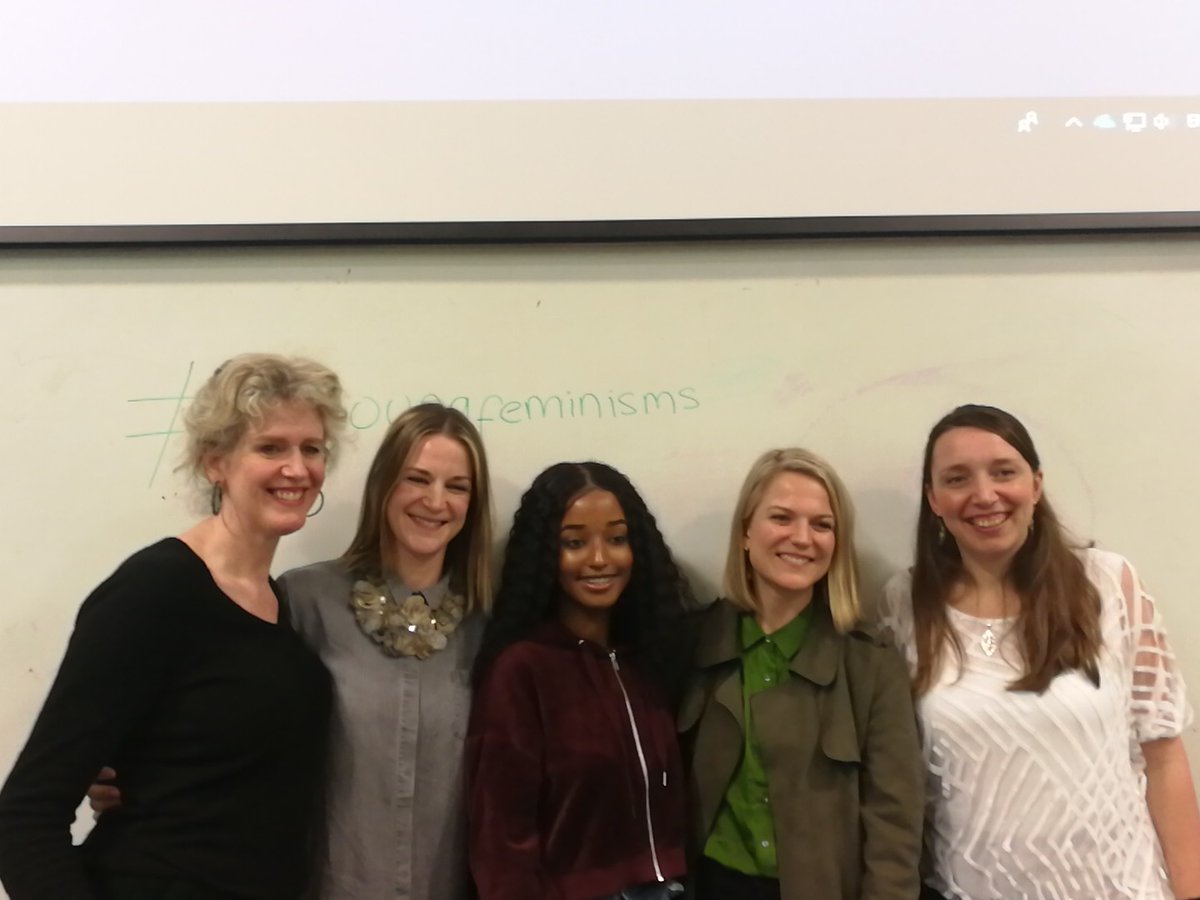
Congratulations to University of Bristol Politics PhD student Rosie Walters! Working with the Gender and Development journal, she organised and ran an amazing event on “Young Feminisms”!
The event featured representatives from:
Oxfam
Integrate UK
The Association for Women’s Rights in Development
The talk attracted over 90 staff and students from the universities of Bristol, Cardiff, Exeter, Oxford and UWE. On top of that, hundreds more have watched the video of the event on the Gender and Development journal Facebook page!
Congratulations again Rosie, keep up the great work!
The official video of the 2018 SWDTP Student conference has now been released!
The video includes interviews with Dr Kerry Papps, SWDTP alumnus Dr Abi Dymond, and Dr Gilberto Algar-Faria!
We’re so pleased to be able to share this insight into the Beyond Research Conference with you all!
The annual SWDTP Student Conference offers a safe space for researchers to try their hand at presenting their work, where they can speak in front of their peers and receive feedback, network and gain invaluable experience of presenting. SWDTP researchers have presented their work at conferences all around the world and this event offers a fantastic starting point to would-be speakers.
The conference is totally free and is organised by students, for students, so researchers can focus the conference on what really matters to them. This year, one of the strands was ‘What’s Next’ and the conference committee welcomed careers advisers, postdoctoral fellows, SWDTP alumni and representatives from the Welsh Government.
If you’d like to join the organising committee for the 2019 SWDTP Student conference- and develop your organisational skills, your CV and your network while you’re at it- get in touch with Sonja– the SWDTP manager- today!
Following the successful inaugural State of Youth Seminar in October, the School for Policy Studies, Bristol, will be holding their second all-day seminar on January 22nd 2019! The theme this time is The State of Youth: Inequality, Insecurity and Transitions to Adulthood.
Call for Papers: PhD/Doctoral paper session
(Post)doctoral students are very warmly invited to present their work in the PhD/Doctoral paper session. To do so, please submit an short abstract to Dr Eldin, including the following details: paper title, name, and institution by Mon 7th Jan 2019. Funding is available to help with travel costs for SWDTP students and PhD students travelling from outside Bristol – if you need help with costs do let us know.
Don’t forget to check out our Training and Events Calendar on our website to see more upcoming events!