Category: Uncategorized

  • That’s a wrap! 2021 Student Conference review

    That’s a wrap! 2021 Student Conference review

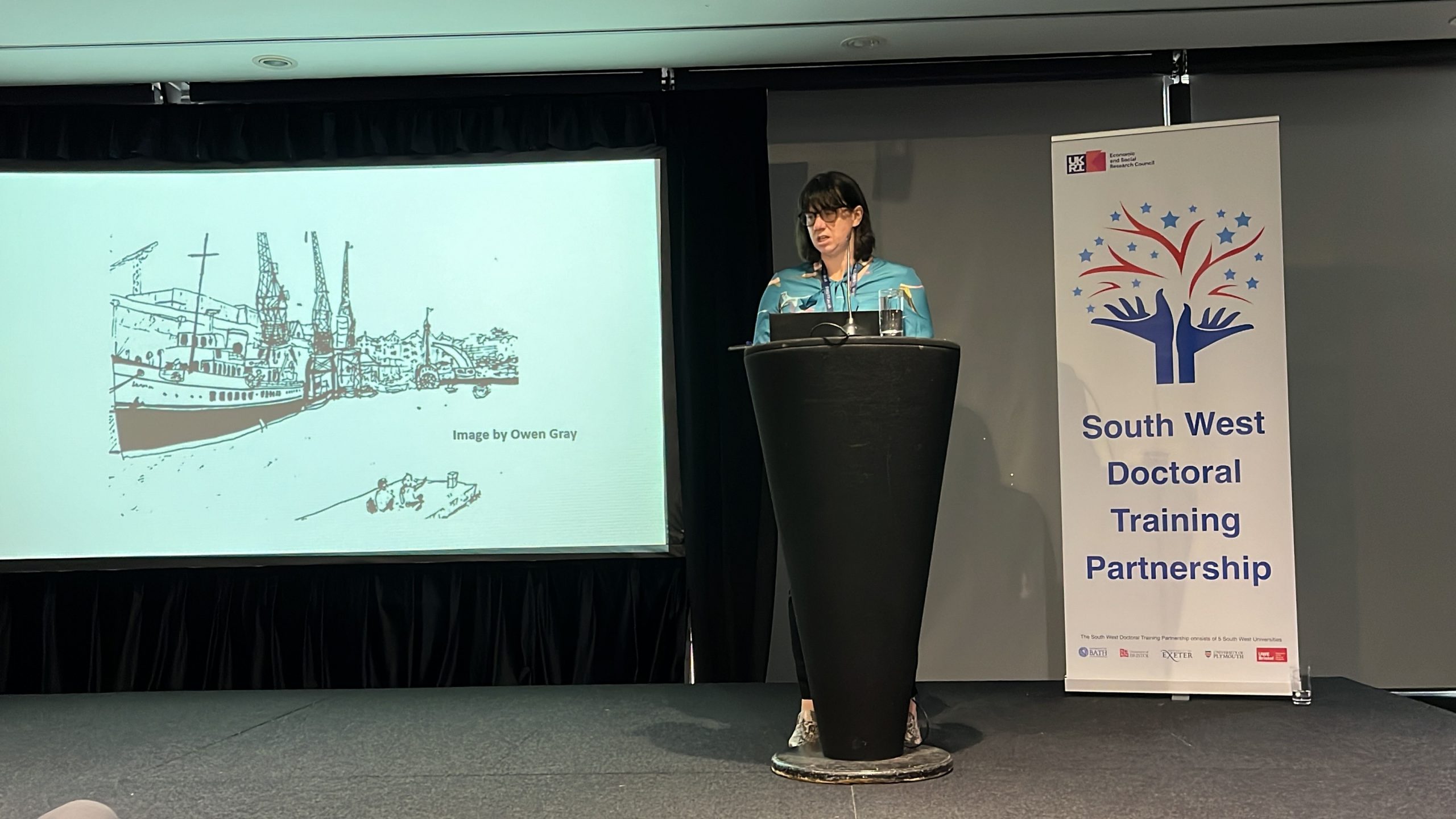
    A huge thank you to everyone who attended our conference at We the Curious on 10 November 2021. We had some wonderful speakers from our students and others and I think we can all agree it felt great to be back in a room with everyone again. Who knew we would miss small talk so much…

    Have a look at some of our favourite photos:

    Poster Competition

    We also held a poster competition for all attending which you can see below. We had a wide range of topics and throughout the day, other attendees and speakers judged the posters. The winner, Sarah McLaughlin, received a Waterstones book voucher for her poster.

  • Black Future Dr: A Podcast Increasing the Visibility of the Black Doctoral Experience

    Black Future Dr: A Podcast Increasing the Visibility of the Black Doctoral Experience

    Racial inequality is a prominent issue in the UK, and this extends into education.

    Black future dr featured image. Image Description: A Black student sitting outside on campus

    We can see this gap at an undergraduate level, with a 22.6% difference between white and black African-Caribbean students receiving a 2:1 degree or above.

    We also see this gap at postgraduate level, with black and minority ethnic students being far less likely to go on to higher research degrees, such as PhDs and professional doctorates, than white students. In fact, in 2020, only 18.1% of research postgraduate students identified as black or minority ethnic.

    Despite these statistics, there is a growing community of black students pursuing doctorates in the UK. To increase our visibility and celebrate our achievements, Black Future Dr has been developed.

    Black Future Dr is an upcoming podcast, funded by the SWDTP’s Impact Fund and dedicated to showcasing the experiences of black doctoral students in the UK. This includes PhD students, as well as students doing professional and medical doctorates. There will be 12 episodes in total, with each focusing on a different student studying a different subject at a different institution. Each episode will be 20 minutes long and will be hosted by Nina Higson-Sweeney (@n_higsonsweeney), a SWDTP-funded PhD student at the University of Bath. We will be discussing a variety of topics, including supervision, motivation, mentorship and non-traditional pathways.

    Episodes will be released weekly starting from Monday 3rd May 2021 and can be listened to via Acast as well as on Spotify, Apple Podcasts, Google Podcasts, and Deezer.

    Current guest speakers for the podcast include:

    • Lateesha Osbourne, a final-year PhD student in Psychology at the University of Bath
    • Rees Johnson, a third-year PhD student in Law at the University of Manchester
    • Adewale Kukoyi, a second-year student studying for a professional doctorate in medicine at the University of Bristol
    • Alanah Mortlock, a second-year PhD student in Gender Studies at the London School of Economics
    • Emmanuel Johnson, a third-year PhD student in Education at Coventry University
    • Louisa Brotherson, a third-year PhD student in Earth Sciences at the University of Liverpool
    • Dave Mankhokwe Namusanya, a second-year PhD student in Sociology at Abertay University

    With 5 more guests to be announced!

    To keep up to date with the podcast, follow @BlackFutureDr on Twitter or subscribe to the podcast on your chosen platform.

  • Make Space: Panel Discussion: LGBTQ+ Experiences of Mental Health and Self-Harm


    People who identify as LGBTQ+ are often at the sharp edge of social inequalities, often facing disadvantage throughout a range of social systems. While there are conversations happening about LGBTQ+ mental health, we do not believe they adequately explore (a) the systemic issues faced by the LGBTQ+ communities (b) the intersection of being both LGBTQ+ and someone with experience of self-harm. In this panel discussion, we seek to give space and time to the ways in which we might think about and experience self-harm and mental health in relation to queerness.

    Facilitated by Make Space (makespaceco.org), an organisation co-founded by SWDTP Student Courtney Sommer, panellists will present their own perspectives on the topic, and will also engage in broader discussion, responding to questions from attendees. The panel brings together a number of exciting speakers, who will provide vital, nuanced perspectives.

    Speakers include:  

    • Nim Ralph (they/them) – trans rights activist and freelance writer, trainer, and facilitator

    • Ginny Russel (she/her) – interdisciplinary Senior Lecturer in mental health at the University of Exeter

    • Tamara-Jade Kaz (she/her) – queer black creative facilitator and trainer based in London.

    • Beth Ingram (she/they) – founder of youth peer support charity Hearts & Minds

    • Max Cohen (he/him) – counsellor, trainer and group facilitator based in Exeter.


    This event is part of a wider program of events focussed exploring LGBTQ+ self-harm.

  • Research Spotlight: Are Products the Only Solution to Menstrual Inequity?

    Kate Bowen-Viner

    Kate Bowen-Viner’s PhD focuses on the messages young people receive about menstruation. In this blog, she explains the menstrual equity movement, recent UK policy developments and argues that free period products are not the only solution to menstrual injustice.


    After reports surfaced of UK school girls missing school due to period poverty, there have been numerous policy developments related to period product access. All schools in England now have access to free products and last month Scotland became the first country in the world to make free menstrual products universally available. These are positive improvements, but are free products the ultimate solution to menstrual inequity?

    What is the menstrual equity movement?

    The menstrual equity movement campaigns for improved access to period products (e.g. tampons and pads) and menstruation education. It challenges menstrual taboos and champions environmentally-friendly menstrual products.

    Campaigners’ calls are a response to problems faced by many people in the UK today, including:

    • Menstrual stigma.
    • People in the UK struggling to afford period products.
      • In the context of austerity and increased foodbank usage, in 2017, Plan International UK found that 1 in 7 girls (15%) aged 14-21-years-old had struggled to afford menstruation products.

    Policy developments

    In response to public pressure, Governments in the UK have taken steps to eradicate period poverty. Policy developments have often focussed on product access:

    Benefits of free products

    Free menstrual products can help to tackle some of the problems outlined above. Free products are useful to everyone who menstruates. Those who struggle to afford products will have improved access to them and will never be caught short. Improved access may help all women, girls and non-binary people who menstruate to feel less anxious about going to public spaces whilst on their period.

    Free products potentially help to tackle menstrual stigma. Products in public spaces imply that just like free toilet paper and soap, period products are normal and should not be hidden. In turn, this may help more people to discuss periods openly.

    Even so, period products are not the silver bullet in the fight for menstrual equity. The situation is more complex.

    Over-relying on free products

    Relying on free period products as the only solution to menstrual inequity could lead to issues.

    Private corporations benefit from government contracts for period products and this could be problematic. Companies with government endorsements can market themselves as socially just. This can help them appeal to socially conscious, modern, consumers. They can paint the picture that they are playing an active role in solving menstruation-related social issues like period poverty or stigma. Companies can then distance themselves from their historical role in perpetuating, and profiting from, menstrual shame.

    Furthermore, governments can distract attention from underlying and persistent wealth inequality. It would therefore be unwise to rely solely on private companies and their products to solve deep seated social issues.

    Over-reliance on products could also distract attention away from other important menstrual equity issues, such as environmental problems caused by plastics in products and inadequate menstrual health provision.

    Where do we go from here?

    Rather than presenting products as the only answer to menstrual inequity, UK governments should be addressing the range of social problems related to menstruation.

    Education is one area that has a vital role to play. Policy-makers should collaborate with teachers and young people to provide menstruation education that tackles stigma, improves young people’s understanding of menstruation and helps pupils to critically examine menstruation’s relationship with wider social issues (e.g. the environment, gender).

    Free period products will be positive for many people and are worth celebrating. However, products will not end all menstruation-related social issues. Those working in social policy need to think critically about how to address menstrual inequity. Product access is just one piece of the puzzle.


    Kate Bowen-Viner is a first year Social Policy PhD student at Bristol University. Her PhD focuses on how young people navigate messages about menstruation. Kate’s PhD supervisors are Professor Debbie Watson and Dr. Jon Symonds.

    Kate has been working in the education sector since she left university. She has been a secondary school teacher, a Civil Servant (Department for Education) and a Senior Associate at the Centre for Education and Youth.

    Kate has particular interests in education policy, gender and education, identity and education and qualitative methods.

  • ‘Decolonization is not a metaphor’

    ‘Decolonization is not a metaphor’

    Suzanne van Even and Zibah A. Nwako

    Suzanne van Even and Zibah A. Nwako discuss the first session in our Decolonising Social Research Series: Decolonising Theory.

    On Thursday 19 November 2020, the SWDTP’s ‘Decolonising Social Research’ series launched with a provocative seminar on Decolonising Theory with speakers Foluke Adebisi (Senior Lecturer in Law, University of Bristol), Mark Jackson (Senior Lecturer in Postcolonial Geographies, University of Bristol) and Arathi Sriprakash (Professor of Education, University of Bristol).

    This seminar series came at an opportune time. As doctoral researchers in the Social Sciences ourselves, we find it very important to engage with decolonial critiques and the decolonisation literature more generally. It is of particular importance in the context of co-creation of knowledge whereby social researchers, like us, work closely with participants, community stakeholders and policymakers. For us both, our research seeks change and impact – not just to engage in knowledge translation, but also with the aim of emancipating and empowering knowledge producers and knowledge receivers, respectively.

    Foluke’s presentation, Rhodes Must Fall, or Rhodes Must Read More Fanon? (title inspired by a tweet by @fanoniscanon), considered what we mean when we talk about decolonising theory. Are we trying to unsettle the concepts that are the foundational presumptions of our discipline(s) or are we leaving those as they are? Do we add in other concepts which will never reach the eminence of the foundational concepts that we hold dear?

    Foluke reflected on how diversifying literature relates to decolonial thought. She argued that there is a difference between including ‘diverse literatures’ (in our research) and decolonial thought. She posited that a major distinction between decolonial thought and diversity is that the latter makes no distinction between epistemic and embodied difference.

    Using a table as a metaphor (the table representing colonised space), Foluke briefly discussed the four main schools of decolonial thought:

    1. Settler states (Americas, Australasia, South Africa) – part of the table does not belong to you, can you give it back to us?
    2. Post-colonial states (Africa and Asia) – well, that’s a nice table, can we join you there?
    3. Latin American critical school (Latin America and Caribbean) – is that really a table? What is it meant for? Should we destroy it and think of a table in a different way?
    4. Colonising states – this category of thought is often not mentioned, because some argue that you cannot decolonise empire (Tundama, 2016).

    Finally, Foluke questioned what decolonial research can possibly do? Referring to Escobar (2018), hooks (1991), and Mignolo (2016), she contemplated whether decolonising theory can be liberatory.

    Mark’s presentation on Decolonizing Theory: Perspectives from Geographies focused on how to reverse the centre-periphery relationship. He questioned whether the vocabularies, categories of thought, and concepts employed by normative social science are suitable and effective means for making sense in, or of, non-Western worlds?

    Although 80% of the world is located outside of Europe, European thought (processes) define our view of the world. Yet, non-Western worlds do not use European concepts such as ‘gender’ and colonised notions of ‘nations’. Mark suggested that decolonial critique attempts to unsettle this – by turning Eurocentric assumptions and concepts on their heads.

    As researchers, we take people’s lived experiences and transpose them through pre-conceived categories, thereby assimilating them into terms that can then be put to work. We argue that as a result of this, knowledge is formed. Mark postulated that this process of identification, extraction, re-purposing and circulation is a form of commodification.

    Mark posited further that there are four main implications for decolonising theory:

    1. Need to enable theorising from the outside.
    2. Give up on the idea of a universal standard and instead embrace ‘pluriversality’ of epistemologies and ontologies (Escobar, 2018).
    3. Regard the decolonial as an option (Mignolo, 2011; Murrey, 2019; Nigam, 2020). It is not a particularly privileged mode of deriving theory but provides a range of possible strategies (Nigam, 2020) that might allow for a necessary preliminary step to reconstitution.
    4. Theorising well is fundamentally about fostering caring. In order to know, you need to care (Dalmiya, 2016).

    In her presentation titled Decolonising Theory: The erasures of racism in education and international development, Arathi asserted that we need to ask questions of the theories that we use.  Moreover, she warned us against superficially adopting the term ‘decolonisation’ as it has become a bit of a buzz word. The aim of decolonisation is to unsettle power relations, in real and material ways. Decolonisation should bring about the repatriation of indigenous land and life; it is not a metaphor for other things that we want to do to improve our societies (Tuck and Yang, 2012). Using decolonisation as a metaphor, keeps colonial structures in place.

    Arathi argued that it is important to decolonise theory because it doesn’t just operate at an abstract level. Instead, theory emerges from lived experiences that shape how we act and intervene in the world in profound and concrete ways. Theories of development, and specifically theories of modernisation, have worked to divide the world into categories such as ‘developed’, ‘developing’, ‘traditional’ and ‘modern’. This entrenches the idea that people and places need to ‘catch up’, as if they were developmentally backwards. This type of theorising that persists today is based on a deficit model, positioning the problem of poverty with racialised and colonised people and their practices. In doing so, it secures primarily European and Anglo-American epistemologies, industries and interventions as valid and good, forming the material effects of epistemic injustice. In education, this colonial way of thinking makes educational inequality irrelevant whilst it is, in fact, profoundly relevant for understanding educational injustices (e.g. Mills, 2007, ‘epistemologies of white ignorance’).

    Arathi ended her presentation with a reading of Abhay Xaxa’s (2011) powerful poem “I am not your data”, reflecting Tuhawai Smith’s (2012) words that “’research’ is probably one of the dirtiest words in the indigenous world’s vocabulary” (pp. 1).

    The presentations resulted in thought-provoking discussions, indicating from this first seminar that there are still a lot of questions to be answered. For example, can we decolonise theory without de-colonising theory? Foluke posited that even after years of decolonising theory – colonial theory is still dominant. When we think about neo-liberal constructions, we are more likely to find validation for decolonising theory than using theory that decolonises. The danger is that we take the path of least resistance. So, it is always important to point out that this is not the destination, this is not where we are headed. Even if we are trying to be more inclusive in our decolonising of theory, we are not just doing that because it is a good thing to do. We are doing it because it brings about a new world. And as social researchers, this is the change and the impact that we seek to achieve through decolonising theory!

    The audio-visual recording of the Decolonising Theory session can be watched here: https://t.co/RDVWf7thyT

    Suzanne van Even is a PhD student at UWE in Bristol. Her research explores how people of African Caribbean and African ancestry cope with mood disorders associated with having an autoimmune rheumatic disease. Suzanne originally trained as a solicitor in the Netherlands before working as a fundraiser for arts charities in both the Netherlands and the UK. She is now retraining as a psychologist. Suzanne’s research interests include the mental health and wellbeing of African and African Caribbean men and women, community-based research and creative research methods. Twitter: @SvanEven77 

    Zibah A. Nwako completed her PhD at the School of Education, University of Bristol. Her thesis is titled ‘In Our Own Voices: A Critical Participatory Study of the Wellbeing of Female Undergraduate Students in Nigeria’ and she researched this topic using a postcolonial feminist lens. Zibah is a speaker, trainer and consultant on women’s personal development and gender justice. Her research interests include the personal welfare and wellbeing of girls in Africa, non-formal education and informal learning, qualitative research methodologies and creative methods. Visit her website and blog here: www.zibahnwako.com

    For more information about the SWDTP’s ongoing ‘Decolonising Social Research Series: Click here.


    References

    Dalmiya, V. (2016). Caring to Know, Comparative Care Ethics, Feminist Epistemology, and the Mahãbhãrata. Oxford University Press.

    Escobar, A. (2018). Designs for the Pluriverse, Radical Interdependence, Autonomy and the Making of Worlds. Duke University Press.

    Escobar, A. (2018). ‘Farewell to Development’. Available from https://greattransition.org/publication/farewell-to-development

    hooks, b. (1991). Theory as liberatory practice. Yale JL & Feminism, 4, pp. 1.

    Mignolo, W. (2011). Epistemic Disobedience and the Decolonial Option: A Manifesto. Transmodernity, 1 (2), pp. 3-23.

    Mignolo, W.  (2016). The communal and the decolonial. Available from http://www.turbulence.org.uk/index.html@p=391.html

    Mills, C. (2007). White ignorance. Race and epistemologies of ignorance, 247, (Sullivan, S. & Tuana, N., Eds) pp. 26-31. State University of New York Press.

    Murrey, A. (2019). ‘When spider webs unit they can tie up a lion’. Anti-racism, decolonial options and theories from the South. In: Routledge Handbook of South-South Relations (Fiddian-Qasmiyeh, E. & Daley, P., Eds).

    Nigam, A. (2020). Decolonizing Theory, Thinking Across Traditions. Bloomsbury Publishing.

    Smith, L. T. (2012). Decolonizing methodologies: Research and indigenous peoples. Zed Books Ltd.

    Tuck, E. and Yang, K. W. (2012). Decolonization is not a metaphor. Decolonization: Indigeneity, Education & Society, 1 (1), pp. 1-40.

    Tundama, N. (2016). You cannot decolonise colonialism. Available from https://www.youtube.com/watch?v=hXJS8d2T1IE  

    Xaxa, A. F. (2016). I am not your data. Available from http://adivasiresurgence.com/2016/01/13/i-am-not-your-data/

  • SWDTP Christmas Party 2020!

    SWDTP Christmas Party 2020!

    SWDTP  Christmas Card Competition & Online Christmas Party

    Warren Speed and Elis Jones (both from the University of Exeter) are pleased to announce that we have secured SWDTP funding to host an Online Christmas Party and a ‘Research as a Christmas Card’ competition. We’re hoping this will be a good opportunity to get together as a group after a while apart, as well as have some fun and maybe a few drinks. We’re also keen to make it (a little bit) less virtual than the Zoom meetings we’ve been having this year – see details below.

    Research as a Christmas Card Competition

    This year we thought it might be some fun and festive for the SWDTP community to enter themselves into a competition designing a Christmas card in the theme of your own research interests (see poster attached). There are a few rules which are:

    1.       Cards should be Christmas themed and related loosely to your research interests

    2.       Cards can be in any format you like as long as the image is clear and can be sent by email.

    3.       Deadline to submit your entry is Tuesday 15th December 2020 at 5pm

    4.       All entries are to be submitted to w.speed@exeter.ac.uk (Include your institution and a maximum of 300 words giving your card some context).

    5.       A public vote will take place online from Wednesday 16th – Tuesday 22nd December 2020. The link will be emailed to attendees and sent via the SWDTP.

    6.       The winner will be announced on Wednesday 23rd December 2020.

    7.       If you have any questions contact Warren Speed (w.speed@exeter.ac.uk) or Elis Jones (erj205@exeter.ac.uk)

    SWDTP Online Christmas Party

    We can all relate to how mundane online meetings and events can sometimes be. Myself and Elis have tried to think of a way of how me could host an online event but bring it to life. To that end we will hosting a variety of mini competitions and events that will involve the things we will send out to you through the post in our SWDTP Christmas Party Pack (along with some extra goodies). As there is no way we can all physically meet, we thought that this would be a great way for us to have some festive fun (see poster attached). Some of the things we have planned are:

    ·         Christmas Playlist 

    ·         Christmas Jumper & Fancy Dress Competition

    ·         Christmas Themed Quiz 

    ·         Balloon Creation Competition

    ·         Virtual Christmas Photo Booth

    ·         Guess the Gift

    ·         Design your own gingerbread man avatar 

    ·         We will have different rooms available for those who want to chat etc.

    To sign up to the SWDTP Online Christmas Party please click here to access Eventbrite.

    We want to remain as inclusive as possible and we understand that some people would enjoy spectating and chatting. We have made plans to make sure that this is also possible and you will also be sent an ‘SWDTP Christmas Care Package’ without the games and props.

    So please come along and get involved and join us. We hope we can bring the SWDTP community together, have some fun, and support each other towards the end of this long year!

    Finally, we would both like to thank the Collaboration Facilitator, Sonja, Richard, Joanna, Helen and Jude from the SWDTP for all their support and hard work. We understand it has been incredibly challenging for you as it has been for all of us. We hope that you are all able to join us for the SWDTP Christmas Party.

    Best wishes

    Warren Speed and Elis Jones

    University of Exeter

  • Decolonising Social Research Seminar Series

    Decolonising Social Research Seminar Series

    Social research has been complicit in slavery, colonialism and racism, in ways that are more and less visible. Social research has also contributed towards antiracist and decolonising movements and activitism. This SWDTP funded seminar series will explore theoretical and methodological tools for conducting research that is antiracist and decolonising. It will look at how we design and conduct research that disrupts established power relations within research, including those between researcher and researched, expert and novice.

    Decolonising Theory 19th November 2020 2-4pm

    Speakers: Foluke Adebisi, Mark Jackson and Arathi Sriprakash (all University of Bristol)

    When it comes to conceptualising a research problem, we often turn to literature and pre-existing theoretical frameworks. The social sciences grew up alongside the European project of world domination and competition through colonisation. Hence, much of the established canon of disciplinary knowledge has contributed to the imperial project of colonisation and contemporary relations of oppression. On the other hand, scholarship resisting and opposing colonisation also has a long and deep history including scholars identifying with marginalised and oppressed racial groups in the Global North and scholars form the global South.

    This session will examine what it could mean when we talk about decolonising theory. Does it mean different things in different disciplines? How do we reconcile the co-optation of decolonising within the agenda of HE with our various understandings of decolonial thought? What questions of praxis arise when we apply decolonial thought to theorising?

    Click here to sign up!


    The Decolonising Social Research seminar series is for doctoral researchers (and their supervisors) at any and every stage of the doctoral journey, who aspire for their research to contribute towards decolonisation in any space or form. Through the short series of events, we aim to stimulate debate around the tough questions that decolonisation poses for social research, to forge supportive networks across universities of the South West and to signpost readings and resources. Across the series, we will engage with the work of established scholars who have published on different aspects of decolonising research, the ideas and experiences of early career researchers, as well as representatives of marginalised groups, whose knowledge has historically been excluded from the academy.

    For each seminar, we will provide recommended reading for those wishing to explore the issues raised further. The seminars will take place as a webinar via Zoom. On registration, participants will receive an email with the Zoom link and recommended reading for the seminar.

    Forthcoming seminars in the series:

    Decolonising epistemology 26th November 2020 2-4 pm

    Decolonising methodology 14th January 2021 2-4pm

    Decolonising research ethics TBC

    Decolonising writing and representation – 21st January 2020 2-4pm

  • SWDTP Funded Research Ethics Conference Update

    I would like to take the opportunity to welcome you to the Research Ethics Conference (REC) blog.

    As the Chair of the REC I thought I would take the opportunity of writing a blog to keep you all updated on the progress of REC2021.

    First of, I would like to extend my thanks to the SWDTP team, especially the Collaboration Facilitator for helping me with my application for £5000 to put this conference together and also Sonja, Richard, Joanna and Helen for approving this and/or supporting me. If anyone has any collaborative funding ideas, I highly recommend speaking to the Collaboration Facilitator who will guide you through the process. More information about Student-Led Collaborative Funding can be found here.

    Before I update you I would like to share with you the following key dates (Please check www.researchethicsconference.co.uk for submission and registration details and links):

    • Conference date – Friday 26th March 2021
    • Conference back-up date – Friday 25th June 2021
    • Call for papers opens 24th August 2020 
    • Call for papers closes 1st December 2020
    • Delegate Registration opens 7th January 2021

    Ethics has never been as important as it is now. The world we live in is changing at a dramatic pace and we must maintain rigorous and critical ethical practices of the research journey, across all disciplines throughout STEM and HASS. But what exactly is ethics and what does it mean to conduct ethical research? 

    While academic and other organisations have ethics committees and processes in place, there is often little space or time in institutions to discuss what ethics means in practice, how our understanding of ethics varies across disciplines, and how practices change and develop over time.  Research ethics can sometimes run the danger of being misinterpreted, underplayed or merely viewed as a ‘tick box’ exercise.  Academics can  also find themselves ‘playing catch-up’ due to the rapid progress of research and new methodologies and discoveries that we have to regulate for the first time.

    We invite academics as well as local stakeholders who have an interest in research ethics to share knowledge and best practice to help raise understanding of the importance of research and practical ethics. This conference will provide an opportunity for presenters from across all disciplines to share their findings collected through ethical practices, as well as any ethical dilemmas that arise from conducting primary data collection or the interpretation of statistics and other secondary data‘ (Research Ethics Conference, 2020).

    The conference committee currently consists 23 committee members, made up of academic and professional staff, doctoral students, external organisational partners and a variety of members from universities within within the South West of England and Cardiff University. I am very grateful to be working with such a large committee, who all have an interest in research ethics. You can see who is member of the conference committee by clicking here. If you would like to join the committee you are most welcome. Please email REC2021@exeter.ac.uk to find out more.

    Over the last 5 weeks we have held 2 committee meetings to discuss our plans for REC2021 and have made extraordinary progress. The committee has so far discussed:

    • Call for papers – Call will be released on 24th August 2020, closes on 1st December 2020.
    • Delegate registration – Delegate registration opens 7th January 2021 via Eventbrite.
    • Keynote speakers – The committee has put forward suggestions of potential keynote speakers. We aim to have two keynote speakers from contrasting disciplines.
    • Workshops – The committee has shared workshop ideas for workshops before, during and after the conference, including workshops aimed at external organisations.
    • Cross-discipline Inclusivity – Ways to make sure the conference is accessible across all disciplines.
    • External organisations – Ways to make sure the conference is accessible to external organisations for presentations and as a delegate.
    • Presenter support and preparation – The ways that we as a conference team can support paper and posters presenters, from writing a abstract to presenting.
    • Research Posters – Relaxing poster specifications to allow innovation, for example the use of QR codes, videos, sound 3D posters etc.
    • Social Media and REC Website – making sure we have an online presence and accessible, readily available information.
    • Covid-19 – Conversations around Covid-19 restrictions using the guidance from the University of Exeter and UK Gov.

    Our call for papers team (Rebekah, Elis, Alice, Ginny, Fida and Lois) which is lead by Maria have already nearly completed the abstracts submission information ready for our 1st call for papers to be open on the 24th August 2020 (closes 1st December 2020). The CFP team have worked exceptionally hard to make sure the conference is accessible across all disinclines and external ogranaisations. To contribute towards accessibility and inclusivity across all disciplines, the conference committee decided not to have a theme and to keep the conference as open as possible. We hope that this will help contribute towards opening up cross-discipline conversations.

    The conference team is also working towards creating and organising workshops. If you have any suggestions or know anyone that would be interested in hosting a workshop, please email REC2021@exeter.ac.uk addressed to Tracey.

    As a conference team we are carefully monitoring government and university advice on Covid-19 restrictions. We will be keeping up-to-date on these restrictions and we will posting updates as and when we get them.

    I will aim to update this blog after every committee meeting to give you all an update of how things are getting on.

    Best Wishes

    Warren

    Research Ethics Conference 2021 Key Dates

    • Conference date – Friday 26th March 2021
    • Conference back-up date – Friday 25th June 2021
    • Call for papers opens 24th August 2020
    • Call for papers closes 1st December 2020
    • Delegate Registration opens 7th January 2021
  • SWDTP Webinar: The Impact of Conducting Sensitive Research Online: Before, During and After COVID-19

    SWDTP Webinar: The Impact of Conducting Sensitive Research Online: Before, During and After COVID-19

    Many social scientists conduct research on sensitive or even traumatic topics, but the effects of this work on researchers are rarely discussed. The SWDTP have put together a webinar to discuss this impact. This webinar has been filmed and put on youtube and is accessible on this page.

    In this webinar, Emma Williamson and Alison Gregory will draw on their extensive experience of undertaking research prior to and since the pandemic, noting some of the challenges they have encountered and suggesting practical coping solutions to employ.

    Their primary focus will be Gender Violence Research, but the webinar will be relevant to anyone whose research involves sensitive topics and working with vulnerable groups.

    About the Speakers:

    Emma Williamson: Reader in Gender Based Violence

    Emma heads up the Centre for Gender and Violence Research, School for Policy Studies, University of Bristol.

    Emma has 25 years of research experience working in the area of gender-based violence in the UK and overseas. Her research topics include health, law, social policy, and service interventions.

    Emma also has a keen interest in research ethics and has published widely on this topic. She is the current Faculty Research Ethics Officer and Chair of the Faculty of Social Sciences and Law Research Ethics Committee.

    https://research-information.bris.ac….


    Alison Gregory: Research Fellow (Traumatised and Vulnerable Populations) Bristol Medical School, University of Bristol

    Alison’s research is in Domestic Violence and Abuse (DVA), including its impacts on people’s health and wellbeing, and how professionals can best respond to support survivors, their children, and those providing informal support (friends, family members, neighbours and colleagues).

    Alison’s research has expanded to include work on rape and sexual assault, older survivors of abuse and violence, and vicarious trauma in researchers. Alison works closely with DVA specialist organisations, practitioners, and commisioners of DVA services.

    https://research-information.bris.ac….

  • How to Develop a Plan B Workshop

    How to Develop a Plan B Workshop

    If Covid-19 has affected your research and you are struggling to motivate yourself to write in lock down or wondering what to do if your data gathering or fieldwork has stalled this may be the workshop for you:

    Online workshop: How to develop Plan B

    This participative workshop will help you to identify key outcomes and objectives of your research and map out realistic and achievable alternative routes to achieving them. Our focus will be on how you can re-plan activities that will achieve those intended outcomes and explore problem-solving skills and flexible approaches that will help you adapt to change. We will work through several glucard​TM​ brainstorming, planning, problem-solving and optioneering tools which you will be able to refine, adapt and review for use throughout your PhD. Dr Sabina Strachan (our trainer) will graphically illustrate concepts and demonstrate tools by sharing live visualisations. We will use real examples and processes that are accessible, visual and hands on and mindful of the present context.

    The workshop will also be specific to your cohort – 1st, 2nd, or 3rd year – and enable small group/pair discussion and peer learning. The workshop will help free your creative thinking by getting draft strategies down on paper, give you practical tools and tangible examples, and grow your capabilities and confidence to take your research forward.

    Please note:

    • Places on each workshop are limited, and will be allocated on a first come, first served basis.
    • If you cannot attend having accepted a place it is important to let us know, as we will release your place to someone else. We anticipate this being a popular course, and we will contact you a couple of days before to check you still intend to join it. If you do not confirm you are still attending we will release your place to someone else.

    Session Dates:

    • Our first session will be on Friday 15 May, from 10:00-12:15 and is aimed at second years/those working on data collection, fieldwork and other research gathering exercises.
    • Our second session will run over two evenings, so those who have caring/other daytime responsibilities can attend and is open to any stage of the PhD. These sessions will take place as part 1: 20 May, 19:00-20:15 and part 2: 22 May, 19:00-20:15. You will need to attend both parts.
    • Our third session will be on Monday 25 May, from 13:45-16:00 and is aimed at final year/writing up PGRs.

    If you have any further questions, please contact Mary Pearson Ferns (mary.pearsonferns@bristol.ac.uk).