Education PhD researcher Tom Avery writes reflections on his research in his new blog. Tom’s research centers around how refugee-background children experience language education in UK schools, although he has broader interest in linguistics, sociology of education, and migration.
His most recent blog provides a fascinating insight into three aspects of researching with vulnerable groups and how his work with refugee-background children has been impacted by this in his most recent blog post. Read it here.
Dr Nikki Hayfield is a Senior Lecturer in Social Psychology. Teaching social psychology, sexualities, and qualitative research methods. Nikki’s research interests are in sexualities, marginalised identities, relationships, and alternative families. Nikki’s current research project explores how bisexual people form and maintain intimate relationships within the wider context of ‘biphobia’ and bisexual marginalisation (in collaboration with Lizzie Reed (UWE, Bristol) and Christine Campbell at St Mary’s University, Twickenham).
Dr Jon Fox is a Senior Lecturer in Sociology at Bristol University. Jon’s main areas of research are in nationalism, ethnicity, racism, and migration. With each topic, he is interested in the ways in which ordinary people reproduce ethnic, national, and racialised forms of collective belonging in their everyday lives. Whilst appreciating the important role politics, culture, and the economy play in shaping social identities, Jon’s research pays special attention to the ways such identities are also the practical accomplishments of ordinary people engaging in routine activities. His research to date has examined these issues around questions of nationalism and migration in Hungary, Romania, and the UK.
Before joining the ESRC, Professor Jane Elliott was Professor of Sociology and Head of the Department of Quantitative Social Sciences, at the Institute of Education, University of London, as well as Director of the ESRC-funded Centre for Longitudinal Studies (CLS) which manages the 1958, 1970 and Millennium Birth Cohort studies together with the Longitudinal Study of Young People in England (now known as Next Steps). In 2012 Jane became the founding Director of the Cohorts and Longitudinal Studies Enhancement Resources (CLOSER) programme. After three years at ESRC, Prof Elliott is to take up the position of Professor of Sociology at the University of Exeter in September 2017.
Below is a bibliography of publications by SWDTP students. The list is not exhaustive and SWDTP students’ names appear in bold. If you’re a student and you’ve recently had something published, email swdtp-enquiries@bristol.ac.uk to have it added to the list.
ATKINS, E. (2017) Saltwater Geopolitics in North America in SOSA-NUNEZ, G. (ed.) Widening the Scope of Environmental Policies in North America: Towards Blue Approaches, Palgrave Macmillan Ltd., Basingstoke [online]
ATKINS, E. (2016) Environmental Conflict: A Misnomer? in SOSA-NUNEZ, G. and E. ATKINS (eds) Environment, Climate Change & International Relations, E-International Relations [online]
JIMENEZ-ACEITUNO, A., MEDLAND, L., DELGADO, A., CARBALLES-BRETON, A., MAIQUES-DIAZ, A., DIAZ MUNOZ, L., MARIN-RODRIGUEZ, M., CHARMORRO-ORTIZ, P., CASADO-CID B. (2016) Social Theatre as a Tool for Environmental Learning Processes: A Case Study from Madrid, Spain in MONROE, M., KRASNY M. (eds) Across the Spectrum: Resources for Environmental Educators. North American Association for Environmental Education, 281-296
LAFARGUE, P., ROGERSON, M., PARRY, G. C. and ALLAINGUILLAUME, J. (2021), “Broken chocolate: biomarkers as a method for delivering cocoa supply chain visibility”, Supply Chain Management, Vol. ahead-of-print No. ahead-of-print.
‘Research in a Changing World: Critical Approaches’
Wednesday November 8th 2017
The SWDTP Conference 2017 was a resounding success. Congratulations to the Conference Committee for the engaging, challenging and well-run day that they provided! The free conference, with keynote addresses by Dr Nikki Hayfield, Dr Jon Fox and Professor Jane Elliott, was held at the University of Bath and welcomed over 100 visitors.
A final word from SWDTP Conference 2017 Committee Chair- Louise Hatherall:
Another year, another SWDTP conference complete! Planning for the conference started in March and began with an aim to represent the breadth of research and experience in the SWDTP. We also wanted to recognise the transition from ‘Centre’ to ‘Partnership’ and welcome our new colleagues from the University of West of England and University of Plymouth. With the invaluable help of the committee and SWDTP staff, the conference- held on 8th November at the University of Bath- was a wonderful day filled with engaging keynotes, inspirational workshops and fascinating student presentations.
Our first meeting began by recognising that times ‘they are a’changing’ for doctoral students. Higher Education is facing calls for overhaul, and there is a resistance to the concept of ‘experts’. Additionally, the world is shifting and changing, which makes keeping our research ‘up-to-date’ an increasing challenge. With this in mind we selected our Conference theme: Research in a Changing World: Critical Encounters. From this we developed our themes – ‘Closing The Borders?, ‘Critical Encounters: The PhD Landscape’ and ‘Trust and Impact’. We kept our descriptions intentionally vague and broad: the conference was about how the presenters interpreted the theme. We were open to ‘out there’ ideas!
Our student presenters did not disappoint, with lots of feedback highlighting the exceptional quality of the presentations given. From Social Worker Roles to Tasty Pizza, the presentations gave a small glimpse into the amazing and important work being undertaken by the SWDTP. This year’s conference also had the highest number of poster submissions and our judges, Professor Jane Elliott and Dr Jon Fox, were incredibly impressed.
Given the quality of submissions it was decided that two prizes would be awarded this year. Second place went to Emma Ranger, with First place being awarded to Hannah West and her poster on her experiences transitioning from a military engineer to a social science researcher. A huge congratulation to you both, and to all those who submitted posters.
Given our theme we decided to run workshops which would assist PhD researchers in a changing world. Dr Albert Sanchez Graells, (University of Bristol), gave a fascinating workshop on becoming a digital scholar, using his own experiences from blogging and twitter to show how valuable a digital presence can be for researchers. Lynn Linsdale and Dr Judy Ryde deftly and experientially tackled researcher resilience, focusing specifically on taking care of your own emotional health whilst doing a PhD. Our publishing workshop aimed to tackle the road to publication slightly differently. Experience from Dr Richard Watermeyer (University of Bath) Dr Alexandra Allen (University of Exeter) and PhD student Lydia Medland (University of Bristol) made this panel an invaluable session, and gave the delegates lots to think about going forward. Finally, despite some last-minute hiccups, Dr Harry Pitts and Professor Jane Elliott gave an engaging and frank plenary session about life after the PhD (it does exist!).
Throughout the day we also had three insightful keynotes. Dr Nikki Hayfield (UWE) opened the conference by speaking about her experiences of insider and outsider identities in qualitative research. Dr Jon Fox (University of Bristol) opened our afternoon session with a keynote on the ‘left behind’ of participatory research on Brexit. Finally, Professor Jane Elliott (University of Exeter) closed the conference with her keynote on the higher education ecosystem, discussing current changes and drawing on her experience as outgoing Executive Director of the ESRC. These keynotes drew on various aspects of the conference, and received outstanding feedback from the delegates. They also sparked debate and conversation, which we will hope will continue.
Overall, the conference was a fantastic day, filled with inspiring research from students and academics. As such, I would like to extend a warm and hearty ‘thank-you’ to all the student speakers, delegates, academics and staff who made the day. The conference could not have happened without the immense effort of a team of people. Thanks must therefore be extended to Clare Stevens, Thomas Sealy, Gabriela Julio Medel, Tristan Hotham and Sam Stone, who constituted this year’s committee. Immense gratitude must also be given to the SWDTP staff who guided and assisted the committee: your support, cheerleading and willingness to let us order mulled wine unseasonably early made the conference a pleasure to organise.
I look forward to seeing you all at next year’s SWDTP Conference.
Despite the progress made in the last few decades in developing countries, evidence demonstrates a lack of translation of schooling into learning. The role of systemic factors such as accountability processes continues to remain under researched amidst the prevailing challenges. In this backdrop, my research seeks to bridge the knowledge gap by studying, how accountability processes in public secondary school education systems affect the learning outcomes of students from various socio-economic backgrounds? My study employs a systems approach which views school system as a set of or a network of relationships and cumulative practices occurring in a particular format.
With up to 3.2 million children facing the prospect of not having enough food to eat during half term, new research has highlighted the importance of volunteers in filling the ‘holiday hunger’ gap.
Stephanie Denning, a researcher at the University of Bristol joined forces with the charity MakeLunch to understand how Christian church groups are responding to the growing problem, and how best to ensure volunteers remain engaged.
Recent figures show that 1.2 million UK children receive free school meals which are means tested, with a further two million children who are not eligible for free school meals but whose families are still experiencing poverty. Studies have found that children who did not eat enough food, or who did not eat sufficiently nutritionally balanced food, during the school summer holidays have poorer educational attainment when they return to school than their peers who had enough to eat.
MakeLunch is a network of churches and community groups running Lunch Kitchens to fill the holiday hunger gap by providing the equivalent of a free school meal in the school holidays. It has cooked and served over 65,000 meals in more than 100 locations across England, Scotland and Wales since it was established in July 2011.
Stephanie Denning, an ESRC-funded PhD student in the University of Bristol’s School of Geographical Sciences, conducted the research over a three-year period, analysing the experiences of the people who volunteered with a MakeLunch project that she established. Stephanie has since handed over running of the project which continues to run successfully.
The research contributes to understanding that faith groups and volunteers are playing a crucial role in responding to food poverty by running food banks and children’s holiday groups, through to collecting evidence and campaigning for change. People’s motivations to volunteer ranged from biblical teaching on responding to hunger, through to anger at political reform and wanting to do something active and meaningful in response.
Stephanie said: “The voluntary sector has become an increasingly important part of welfare provision in UK society, and so there’s never been a more crucial time to try and understand it. A key motivation for volunteers was obviously to respond to children’s holiday hunger, and volunteers needed to feel this was being met, but there was also a hope it would be an enjoyable and rewarding experience.”
“As more and more groups depend upon volunteers to provide services for society we need greater understanding of how volunteering functions; it is not just the traditional client or recipient that can benefit. To continue giving their time, the volunteer must also feel the benefit too.”
Advice to charities and voluntary groups is to give as much attention to volunteers as to those a project is serving; a sense of enjoyment, satisfaction and feeling appreciated are important for a person to want to continue volunteering; maintaining a personal relationship with volunteers is as important as volunteer recruitment; it is vital that volunteers feel appreciated and valued, otherwise it is likely that they will stop volunteering or seek a different opportunity; and understanding volunteers’ motivations, expectations and volunteering experiences will help voluntary groups to develop positive relationships with volunteers and gain their longer term support.
Rachel Warwick, Director of MakeLunch comments “At MakeLunch we’re committed to equipping and mobilising churches to serve families in their own communities. We’re dependent on volunteers to meet this need and Stephanie’s research has been invaluable both as we’ve developed this centrally but also in training our team leaders at our national conference.”
On Wednesday 5 November 2014, the SWDTC held its third annual conference for postgraduate students, at the University of Bath. This hugely successful regional event brought together over 100 students from within the social sciences and beyond to meet, share and engage with the many different opportunities that interdisciplinary collaboration promises.
The event explored and elucidated the benefits that collaboration and dialogue can bring to researching in an environment characterised by interconnectivity and the transcending of traditional scholarly boundaries. Reflecting this overarching theme, the conference was structured under the three sub-themes of collaborative methods, internationalisation, and PhD experience.
There was much to inspire, with student presentations and interactive discussions, workshop sessions, a panel discussion, and keynote speeches from two of the leading researchers in the south west, Professor Hugh Lauder (University of Bath) and Professor Stephan Lewandowsky (University of Bristol).
Alongside the formal sessions, there was a poster display of outstanding student research projects, including everything from “how the dead live” to “how the sea got salty”. Congratulations to the winner of the Poster Showcase, Jana Kralova (University of Bath), and runner-up, Miguel Cerna (University of Bristol).
Special thanks must go to all of the wonderful student presenters, academic and student discussants, workshop leaders and keynote speakers for their fantastic contributions and participation on the day. Thanks also to all of those who attended, as well as to the University of Bath for their support in hosting what was a truly fantastic event!
The aim of my research is to explore how decision makers negotiate what ‘knowledge’ contributes to sex and relationships education (SRE) policy for a selection of primary schools in Bristol. ‘Decision makers’ refers to governors, head teachers, SRE teachers, external consultants and others who contribute to decision-making about SRE. This will involve looking at what criteria decision makers, as individuals and as a potential collective, use to assign value to different kinds of information (including technical information, historical pathways, community values, personal attitudes, etc.) and how decision makers use these knowledge(s) to create a case and to negotiate with other decision makers to advance their political persuasion and preferences with regards to SRE policy.
My research focuses on prominent campaigns that advocate investing in young women in developing countries and posit girls’ education as the solution to global poverty.
My research examines the extent to which the concept of class can provide a theoretical framework to interpret how the individual backgrounds of asylum seekers, such as their education or occupation in their country of origin, may account for discrepancies in procedural outcomes. It is well documented that in the UK some asylum seekers get much quicker and more accurate initial decisions than others, for reasons that go beyond whether they are making a genuine claim. I am interested in exploring how class identity is constructed through perceptions of social value, and how these values may influence the decision-making process.





 Before joining the ESRC,


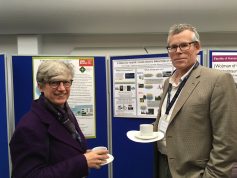 Our student presenters did not disappoint, with lots of feedback highlighting the exceptional quality of the presentations given. From Social Worker Roles to Tasty Pizza, the presentations gave a small glimpse into the amazing and important work being undertaken by the SWDTP.
 Given our theme we decided to run workshops which would assist PhD researchers in a changing world.