The SWDTP Conference 2020 will be held in Bath in November (date and venue to be announced). However, planning this event will start in early spring!
The annual SWDTP conference is a conference organised for students by students. Think you’ve got what it takes to conceptualise, organise and run a successful conference? Well, we are looking for enthusiastic and committed people to organise this years event.
The conference is free of charge and is open to all PGR students across the five SWDTP institutions, regardless of funding source. It is a great way to get conference presentation experience and meet other students, who are at different stages of their research, to share ideas and details of projects, plans and experiences.
More importantly, for the organising committee, it presents a fantastic skills development opportunity in devising, developing, planning, organising and hosting an academic conference in a collaborative and supportive setting. There are a whole raft of things to get involved in from reviewing abstracts and finding keynote speakers, to creating posters and booklets, running social media and booking facilities and not forgetting the most important element of any conference, ordering the sandwiches!
Want to be involved? Got burning ideas for themes or topics? Got an eye for detail or a flair for organising? Then don’t delay, we want to hear from you today!
As a Sport and Health Sciences PhD candidate, my research is concerned with injury and illness in adolescent athletes, with a specific focus on distance running. In March of this year I had the opportunity to undertake an 11-week Overseas Institutional Visit (OIV) at the Oslo Sports Trauma Research Centre (OSTRC), based at the Norwegian School of Sport Sciences. The OSTRC is a world-leading research centre with the aim of preventing injuries and other health problems in sports through research on risk-factors, injury mechanisms, and prevention methods. The goals of my visit were to develop data management and analysis techniques, share preliminary PhD research findings, and to develop an international research network.
Whilst in Oslo, I was able to attend a number of workshops that were relevant to my current research and spent time building a data analysis tool with Dr. Ben Clarsen. I was also able to present my PhD research during the centre’s annual Spring Seminar at Kleivstua, a personal highlight, whereby I was included in proceedings as if I were a full member of OSTRC.
The research network that I developed during the visit, which included academics at a number of the International Olympic Committee Injury Prevention Research Centres, has already been hugely beneficial, with further collaborative work being possible further into my career.
In terms of the OIV experience, as a whole, I benefited from a very engaging research environment, being able to share ideas with and learn from the staff and PhD students based at the OSTRC. This was complimented well by the Physical Activity and Health group, who I also had regular contact with during my visit. I also benefited from being able to experience the work that was being carried out at the Norwegian Olympic Training Centre (Olympiatoppen) which has helped me to understand how athlete surveillance methods can be embedded within the context of performance sport
The visit was rounded off by watching the Oslo meet of The Diamond League (an annual series of elite track and field athletic competitions) at the iconic Bislett Stadium!
I would highly recommend the OIV Scheme to other students. The primary reason for this is to experience a different research culture to your ‘home institution’. During a PhD, you can become a little too familiar with your own research environment. Therefore, an OIV allows you to experience how a different research group operates, spend time with leading academics, and challenge your own academic predispositions. This opportunity also allows you to develop a substantial research network in a different country.
Rob Mann Health and Wellbeing, University of Exeter
For more information on OIV funding, download our OIV Guidance notes
If you are moving to a new country, grasping the language is one of the best ways to find your way into their world.
At lære dansk
(Learning Danish)
Danish has nine official vowel sounds but depending on the position of the vowel in a word, there are actually up to forty different vowel sounds. Combine this with D’s that sound like L’s and R’s that erupt from the back of your throat and you have a notoriously guttural language where words fall out of the mouth in a drawl that is typically described as speaking with a potato in your mouth. As an Irish person, this should be second nature.
I am an ESRC funded (1+3) PhD candidate in Sociology at the University of Exeter. I am currently on fieldwork in Denmark where I am studying the role, significance and impact of transparency in the production of meat and the management of zoo animal populations.
Thanks to the ESRC Difficult Language Training funding, I moved to Denmark in Spring of last year to commence a language course. However, I started learning Danish two months earlier on a fantastic website called ITalki. This connects language learners from all over the world with professional language teachers to facilitate language learning via Skype. With the help of my Danish teacher Lirón, my Danish competency advanced rapidly. It was possible to pay for these classes using my ESRC Research Training Support Grant and it wasn’t until I moved to Denmark that I realised how vital it was that I had started learning online.
Flytter til Danmark
(Moving to Denmark)
Whilst English is widely-spoken in Denmark, competency in Danish from the beginning made navigating public transport and rental contracts a whole lot easier. Furthermore, I am not ashamed to admit that the first few weeks of the move were very difficult due to self-inflicted pressure to speak Danish well and find a place to live. However, I persisted with the ITalki classes and developed my confidence. After only two months of one-to-one intensive classes prior to my DLT, I was able to skip six months of the language course in Denmark so that I was now learning at an advanced level. Starting at this advanced level laid the foundations for engaging with my participants primarily through their mother-tongue from the very beginning of the fieldwork.
The difficult language training funded group classes in Danish at a high level. These classes encouraged you to write and speak about Danish history and culture as well as discuss environmental, societal and political issues in contemporary Denmark. I began to build my confidence and would use Danish at the shop, the café and the library. Every interaction I had with a Dane, I would labour over the sprawling vowels and gulping diphthongs. Seeing a non-Dane struggle with the language is a common occurrence for a Dane and they would politely offer; ‘you can speak English if that is easier.’ But my stubborn determination to ‘snakke på dansk’ would take over and I would respond, ‘Nej tak! Jeg foretrækker at snakke på dansk!’
Ølens kraft!
(The power of beer!)
It is also important to note that alcohol improves language ability… so they say… I remember I was in a bar in Copenhagen and went to order a drink. I had practiced my sentence several times in my head before pronouncing;
’Hej. Kan jeg få Tuborg, tak!’
The sharply-dressed Danish barman smiled and responded, ‘På fad?’ (on draught?)
I reply ‘Selvfølgelig!’ That is the Danish for ‘of course’ and is pronounced like ‘se -fewww -lee’. It is one of the more enjoyable Danish words to say as it has an inbuilt lyricality; it rises and falls like a good Irish accent would. It is rare to find such lyricality in Danish.
As he pulled the pint, he then added in English, ‘Are you from Ireland?’
Somehow, I had managed to speak Danish with an Irish accent! However that was two months into my stay and nowadays, it is more common that people think I am Danish and speak freely to me pådansk which can present another set of difficulties!
Vigtigheden af sprogindlæring
(The importance of language learning)
Language learning was not a choice for my research, it was a necessity! So if you are going to a country where English is not the primary language, take the time and make the effort to learn the language, regardless of whether you are social anthropologist like me or not. If you are moving to a new country, grasping the language is one of the best ways to find your way into their world. By developing my Danish, I could immediately interact with participants and at a very basic level, it was a conversation starter. When I started my fieldwork in one of two field-sites, I would open with Danish and eventually switch to English. Today, almost a year after moving to Denmark, I speak primarily through Danish.
If you are learning a new language for your doctoral fieldwork and thinking about applying for the DLT funding, here is what I would recommend. It is important to remember that it is actually a prerequisite of the DLT funding that you have already commenced language training so that the DLT funding can be as effective as possible so start now!
Tips til at lære et sprog
(Tips for learning a language)
Grib Muligheden!
(Seize the opportunity!)
I no longer attend group classes but as an independent student, I have an exam next month which, if successful, I will be at the highest level of the Common European Framework in European Languages in Danish. Furthermore, with this qualification, I am eligible to work in the Danish university system. The DLT afforded me the opportunity to learn the language while being fully immersed in the culture and has enhanced my career prospects. During my DLT placement, I was awarded a Carlsberg grant to participate in a PhD Masterclass at the University of Copenhagen. I also developed my research network during this period by being associated with the University of Copenhagen as a visiting researcher.
I organised the three month DLT placement to extend into my fieldwork in Denmark which is recommended by ESRC and also increases the likelihood of your application being successful. The SWDTP were very supportive throughout the application process so that the likelihood of being successful is high if you make a good case, demonstrate the effort made to learn the language prior to the DLT and have the support of your supervisor. Also, one final point to remember is that the DLT is an extension, so this means I have an extension of three months added to my PhD completion date. I’m sure I will be grateful for this when the time comes!
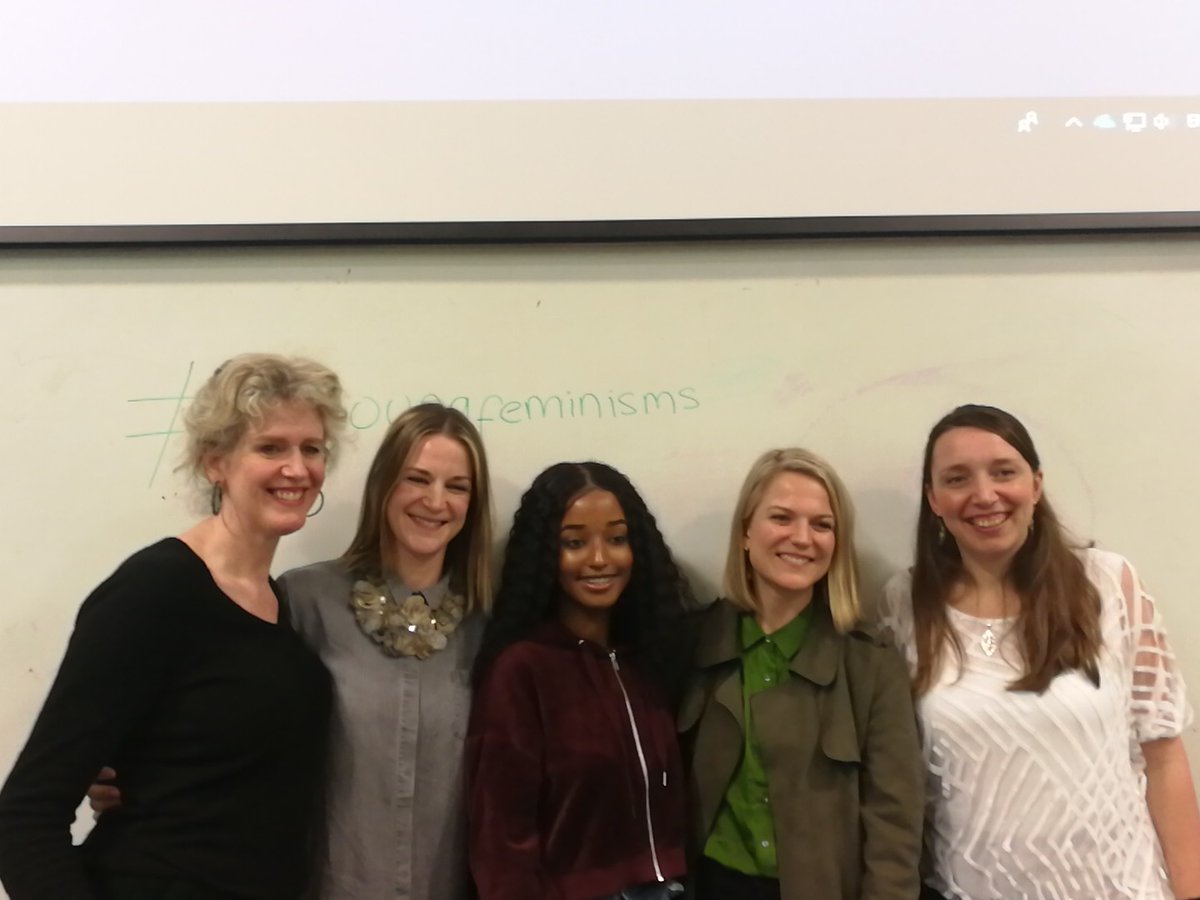
Congratulations to University of Bristol Politics PhD student Rosie Walters! Working with the Gender and Development journal, she organised and ran an amazing event on “Young Feminisms”!
The event featured representatives from:
Oxfam
Integrate UK
The Association for Women’s Rights in Development
The talk attracted over 90 staff and students from the universities of Bristol, Cardiff, Exeter, Oxford and UWE. On top of that, hundreds more have watched the video of the event on the Gender and Development journal Facebook page!
Congratulations again Rosie, keep up the great work!