Category: SWDTP

  • Alisha Tuladhar Placement- The Innovation Beehive

    Back in the summer, Alisha Tuladhar had the opportunity to undertake a placement with The Innovation Beehive, a consultancy firm based in Cirencester. We asked Alisha a few questions about her placement and what she gained from it:

    Please give a summary of the placement and the work/activities you undertook.

    “My placement at The Innovation Beehive comprised of a range of activities. I attended various workshops, talks and presentations both internally and externally with the firms’ clients, for example: Two-days-Innovation Bootcamp Workshop at a client’s Head-Office in London, also had the opportunity to attend the Retail Week at Gloucester, attended several networking sessions in the Growth Hub and was part of the community on site.”

    Did the placement meet your original objectives and expectations? What were the tangible outputs or outcomes? Where there any unexpected outcomes or opportunities arising from the placement?

    “Yes, the placement met my original objectives and expectations. I initially had two major expectations: assisting the Consultant Head, on projects and using my research skills to help with the firms’ activities. I had expected my main job to be understanding the clients’ needs, analyse them and propose solutions that are customer-centric, technologically feasible and economically sound.

    These expectations were not only met, but in fact, surpassed. Since I was not only involved in client facing projects but also in the development of an internal training material for a large multi-national firm, it was a humbling experience for me to be working amongst an extremely knowledgeable team of consultants. This allowed me to gain an insight on how training materials were created and eventually enrolled in large MNCs.

    Moreover, again unexpectedly, I also got the opportunity to go to various events: some in London, some in Gloucester and was also invited to the Polo Club for a team outing. They were all tremendously valuable networking experiences.”

    How has the placement developed your insight into working with non-academic partners and the benefits and/or challenges of collaboration?

    “Indeed, there are a few differences whilst working with a non-academic partner. The first major difference was that the non-academic sector works in a pragmatic manner and is highly outcome-driven, rather than novelty-driven. In a PhD, we are often seeking for contribution to knowledge or are often
    truth-driven. Whereas, in a non-academic setting, it is more about outcomes and getting things done, rather than spending too much time on the foundational knowledge/ literature review.

    Second difference was the fact that there was very limited time allocated for research tasks. I think whilst doing a PhD or writing papers, the research component is lengthy and a time-consuming process, however with non-academic partners, the deadlines are stricter and tighter. There isn’t much time allocated for a deep-dive research. One needs to be extremely fast and proficient at their tasks.

    And the final difference is the number of stakeholders present.  I personally felt that whilst doing a PhD, its more about your supervisory team, which would be around 2-3, however, whilst during the placement, I was working with a larger team and had a lot of different moving parts. For example, in order to organize one event, there are clients, printing presses, designers, website, marketing communications hence it is more of a team effort with a smooth communication requirement. I personally found that in a PhD there aren’t too many stakeholders.”

    Has the experience of doing the placement made you think about the potential or the impact of your research differently? If so, how?

    “My experience at The Innovation Beehive has definitely shaped my thinking to be more wary of how my research might be applied, what value it brings to UK businesses. More specifically, I have realised that
    there is a lot of good research being done and published in Management Journals, however not many are read or known to business executives. I think the way forward needs to be more inclusive whereby the government, academia and businesses not only have access to research but also are conversing and sharing knowledge with each other. One way to ensure research impact is to publish in Open- Journals perhaps, this is something I personally will aim to do.”

    Are there opportunities for further collaboration with the organisation either for yourself, or for other students, in the future?

    “Yes, I think The Innovation Beehive team and founder, Mok, is very supportive towards students and the academic sector.
    In fact, Joe, the Innovation Director of the firm has already come to the University twice to record three academics for their Podcast. Hence, I think there is definitely more room for collaboration.”

    What advice would you give to a fellow student who is considering undertaking a placement?

    “My advice to a fellow placement student would be “listen, learn and be proactive”. I truly believe in the salience of being curious, asking the right questions, and making sure you are gaining the most of everything that your placement has to offer. Placement is a great opportunity to learn but you will only learn once you ask. So be courageous, be proactive and do your best.”

  • Alison Pearson- Cohort Building Fund

    Shut up and write sessions at St Luke’s, 2019

    As a PGR at the St Luke’s campus at the University of Exeter I had noticed that not many events and activities happen here – if you are lucky you bump into a colleague in the café or library, but it can leave you feeling a bit isolated.

    When I heard about the SWDTP Cohort Building fund I thought this might be the ideal way of getting something off the ground here – I know that people are busy, so I thought it would be good to find a way of combining social support with getting some work done. By chance I had recently heard about the “shut up and write” concept via some online communities, and so put forward a proposal to the SWDTP to fund a series of “shut up and write” events – the idea being to use the funding for refreshments to have at the end of the sessions to encourage people to stay on and develop those important informal social networks.

    With great thanks to the SWDTP for their support we managed to run a total of 23 sessions – and to have an event most weeks between January and July. The sessions evolved over this time – we found that the format that we liked the best was to have 3 writing bursts of 25 minutes each (with very short comfort breaks in between) and then to finish with coffee and cake. We had enough budget to finish with lunch every few weeks which added to the social feel and encouraged lots of productive writing – and good attendance!

    The only challenges really were working out how to order catering and getting a budget code set up, and deciding how best to promote the events. This was easily solved by setting up the events on Eventbrite and asking for these links to be included on internal emails and newsletters both at Exeter and through the SWDTP. Our biggest event was our first lunch, with 16 people: most weeks we had 8-10 people and it was great to get to know people at different stages of their PGR journeys and from different subject disciplines.

    There is something about writing in the company of others than creates a focussed and disciplined approach to your writing, as expressed by some of the attendees:

    “ I really appreciate these sessions because they help me focus on my writing. Additionally working in a quiet environment helps me produce good quality pieces of writing. It’s good to set a goal and then come to these sessions and achieve it!”

    “The shut up and write sessions have been great for me. I am a part time PhD researcher and spend most of my time at home working on my own. I find the sessions helpful in bringing a focus to my work – both while I’m in the room and also in advance in getting something ready to write. Also great to have some social contact and to share some of the stresses of PhD life. Really useful focussed and purposeful atmosphere.”

    “I have found these sessions invaluable for providing protective time for writing as well as peer support. Its really helpful to timetable/ provide structure for my week. The refreshments have supported networking. I have made huge amounts of progress by using these groups.”

    Thank you SWDTP for your support,

    Alison Pearson

    Year 2 PhD Student (University of Exeter)

  • Student Conference: October Update from the Chair

    St Lukes Campus Image
    St Lukes Campus, Exeter

    SWDTP Student Conference 2019

    Effective and Innovative Communication of your Research

    Wednesday 13th November 2019 
    University of Exeter, St Luke’s Campus

    Dear SWDTP Students,

    It’s been a while since you have had an update from the committee and the work we have been doing for the conference in little under a month away.

    Let me tell you where we are at the moment. There is a lot to take in… here we go:

    –  Abstracts: We have had an overwhelming number of abstracts submitted this year. We have now informed all those who have been successful and those were not successful this time. The quality of the abstracts were great but due to time and space we had to reject some based on the three reviewers scores. If you submitted an abstracts and haven’t heard from us then please do let us now.

    –  Posters: We have had a great number of posters that have been submitted so far. You do not have to register first and can bring posters on the day. However, registering means that we can reserve you a space.

    –  Workshops: We have at least 6 workshops happening throughout the day around the theme of communication. These workshops are not bookable in advance and are only bookable on the day. When you register and collect your credentials you will also then be able to head over to the ‘Workshop Registration Desk’ and pick 1 or 2 workshops you are interested in attending. This will based on a first come first serve basis.

    –  Keynote Speakers: We are delighted to announce that our two keynote speakers have all been confirmed. In the morning, Professor Rob Freathy from University of Exeter will be giving his address. At close of conference, Chris Shaw who is the Clerk in the House of Commons will be delivering his address.

    –  Catering: We have a great local caterer (Birch Catering) who will be supplying this year’s food and refreshments. There will be unlimited tea and fresh filter coffee all day along with orange and apple juice and a delicious buffet in the afternoon for lunch.  Birch Catering will also be making fresh sandwiches and snacks with ant left over ingredients to donate to a local homeless charity.

    –  Reusable Cups/Water bottles: If you have a reusable cup or water bottle then please bring it with you so that we can contribute towards sustainability. If you don’t have one, don’t worry, paper cups will be provided.

    –  Drinks Reception: We have put on a really nice drinks reception at the end of the conference serving both soft and alcoholic drinks. There will also be bar snacks and Canapes served.

    –  Coach Travel: For those of you coming from Bath and Bristol, please don’t forget that there are railway works between Bristol Temple Meads and Exeter St David’s on the day of the conference. The SWDTP Conference Committee and the SWDTP team in Bristol have worked hard to try and sort this out. We have now been able to put on a FREE and DIRECT coach service from Bristol Tempe Meads straight to St Luke’s campus. The time this takes works out to be roughly the same time it would be to travel by train to Exeter St David’s and either walk or get a bus shuttle to St Luke’s. You should have received details of this from the committee. If you haven’t please let us know and we will send the information to you. Please note that spaces are filing quickly and we only have 63 spaces.

    –   Timetables and Programme: We are still working on the timetable and programme and the next stage for us is to look at themes from the abstracts. We have already placed papers into some themes and the committee will be looking at this in our next committee meeting. Programmes will be available online and you will also receive one in your conference pack when you register.  

    –   Stalls and Pop-up shops: We have invited Blackwell’s the book shop to this year’s conference who will be setting up a pop-up shop. They will be selling wide selection of books relating to PhD study. They will also be offering various discounts so please visit them in our ‘Pop-up SWDTP Café’. We will also be hosting some stands from various groups and organisations, so please visit them and say ‘hi’.

    I hope this gives you an idea of where we are up to. I would also like to take this opportunity to thank all of the committee members for their hard work. The committee members have put in a huge amount of hours so far into planning this and a lot of hours into travelling around the partnership institutions. The committee are not paid to do this and it is completely voluntary. There have been some challenges faced with room bookings, travel from Bristol and Bath and timetabling, all of which have been overcome due to the dedicated hard working conference committee. If you see any of the committee during the conference, please say hi to them and thank them for all their hard work! 

    Best wishes

    Warren

    Warren Speed
    Chair of SWDTP 2019 Conference 
  • SWDTP Student Induction 2019

    SWDTP Student Induction 2019

    Welcome once again to our new 2019 SWDTP Cohort!

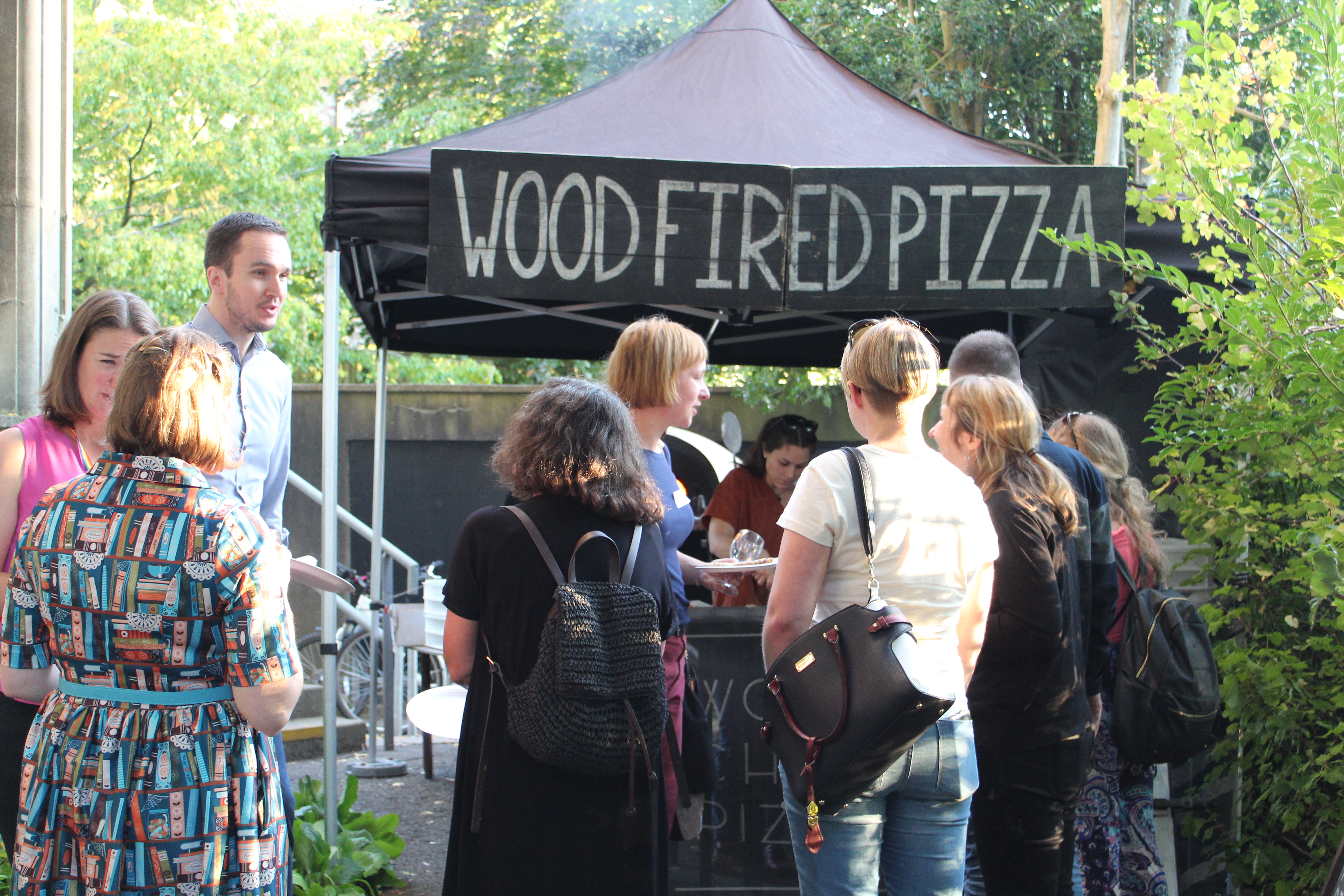
    Beer and pizza time!

    On 18th September we held our student induction and had an impressive turnout! It was fantastic meeting so many new people and hopefully it helped get your SWDTP journey off to a great start!

    If you weren’t able to make it, or have already forgotten some off the information that we heaped upon you, fear not! Below we have a summary of some key information for life in the SWDTP:


    Introduction

    Sally Barnes welcoming the 2019 cohort the SWDTP

    SWDTP Director- Professor Sally Barnes welcomed everyone and delivered an introduction to the DTP. She introduced the SWDTP Team and the Institutional Coordinators and she reflected on the collaborative environment at the SWDTP, urging new researchers to get involved in student initiatives and extra funding opportunities.


    World Cafe

    The world cafe in action

    Current SWDTP researchers talked about some of the allowances, initiatives and opportunities open to SWDTP students. These included:

    Overseas Fieldwork Allowance, Overseas Institutional Visits, Difficult Language Training and RTSG Top Up

    TOR- The SWDTP Student Journal

    Student Representatives

    SWDTP Student Conference

    Placements and Internships


    Website Walk-through

    Sally then finished up with a run down through the SWDTP website. Don’t forget to:

    Sign up to the newsletter 

    Let us know about your successes, publications and blogs!

    If you still can’t find what your looking for, or we haven’t covered your question, please don’t hesitate to get in touch with us at swdtp-enquiries@bristol.ac.uk

    Thank you to everyone who attended and to all the students and staff that worked so hard to make the day such a success!

  • SWDTP Student Mentorship Scheme

    The SWDTP is looking for Student Mentors to offer one-on-one support to the new cohort that will be arriving during the 20190/2020 academic year.

    Undertaking a PhD can be a massive, daunting experience, so we are looking for people who can help the new students settle in, answer their questions and hand out advice that will make this transition in their lives as smooth as possible.

    2019/2020 will be the fourth year that the Student Mentor scheme will run. It is a good opportunity to meet new people, strengthen your networks and enhance your own skills and personal development, as well as earn a little bit of money! It is not a huge time commitment but a very positive way to help make a difference.  

     Mentors will be required to undertake some on-line training at the beginning of September after which we will then begin matching them up with the new starters who have requested a mentor. 

    If you attended the mentor training in 2016, 2017 or 2018 you can sign up to be a mentor again, but are not required to do the training again. Having said that the on-line training will help act as a refresher, so it’s recommended you have a look! 

    Please see the file below for an overview of the scheme.

    Also, we are looking for people to act as site mentors to oversee mentoring activities at Bristol, Exeter, Plymouth and UWE. Site mentors are the first point of contact for any concerns that the mentors may have and will help facilitate the mentor-mentee relationships. They will also help run a small get together at each site before the mentees arrive, to allow mentors to voice concerns and talk through any issues.

    If you’re interested in becoming a mentor, or a site mentor, then please email Maike Klein, the Mentoring Student Coordinator, at mk2073@bath.ac.uk     

  • Critical Theory in a closing and violent world

    The newly-funded ESRC SWDTP Standing Seminar in Critical Theory at Bath, with Bristol and Exeter Universities, is thrilled to announced their next event: 

    ‘Critical Theory in a closing and violent world’ on Wednesday the 15th of May, 5-7pm at the University of Bath (Room 5W 2.4). 

    For this event, we are delighted to once more welcome John Holloway (Puebla), who will be joined by Werner Bonefeld (York), Ana Dinerstein and Theo Papadopoulos (Bath)

    The panellists will bring critical theory to bear on a contemporary global panorama in which the legitimisation of violence, xenophobia, misogyny and racism takes on new and alarming power. What does it mean to speak of a closing world? What are its political implications and those, in turn, of open critique? What openings can critical theory forge in support of emancipatory politics and their horizons? 

    If you are interested in attending please sign up to our event through our Eventbrite page: https://www.eventbrite.co.uk/e/critical-theory-in-a-closing-and-violent-world-tickets-61171466503


    For further enquiries please email: A.C.Dinerstein@bath.ac.uk


  • New ways of being together

    A co-produced mindfulness 8-week course and ‘a little book of wisdom’

    An Impact Project by Chloe Asker

    Chloe Asker Photo

    It was wonderful, as usual. I always feel so, so much better when I finish these sessions, it’s lovely

    (Flora1, participant during a workshop, 15/11/2018)

    What the project entailed

    The SWDTP’s Impact Fund provided me with the resource to develop a grassroots impact project that brought direct benefits to those involved. The project was an 8-week co-produced and participatory mindfulness course developed with a group of participants, out of which we collated a book/zine2 entitled ‘a little book of wisdom’. I combined money awarded from the Impact Fund along with my RTSG, this suited the intention for it to be a research-led form of impact inspired by Pain et al.’s (2016) work on ‘Mapping Alternative Impact’. By offering reflections on the project, I hope to demonstrate the importance of this impact work in developing ‘new ways of being together’ (Conradson, 2011, p. 454) orientated around care, emotional reciprocity and community.

    Undertaking the project

    During May and June 2018 I undertook some autoethnographic research on an 8-week mindfulness course, where I met a group of people who, once the course had concluded, were eager to continue their exploration into mindfulness. Our group was unique because many mindfulness courses do not facilitate sustainable group dynamics post the 8-week course (Shannon, 2010). Often this can lead to individuals not maintaining regular practice as it is no longer supported by others or by a community. The project was an opportunity for us then to maintain our relationship in order to support each other with our practice, and our lives more generally.

    The sessions ran once-a-week for 8 weeks, beginning in October, for 2 hours on a Thursday evening at St. David’s Community Centre in Exeter. We designed the course using a participatory framework, meaning that the workshops were to be designed and run together. We felt it was useful to have the sessions combine themes that were important to us – to create a bespoke course that spoke directly to our needs. Although, logistically, I took charge on the booking of the rooms at the Community Centre and liaising with the mindfulness teacher.

    Initial Challenges

    In the beginning session we found the participatory framework challenging, participants were not sure about what they wanted from the sessions and felt like they needed to be given a structure. There was a shared feeling that they were still fairly new to the subject and practice, and therefore did not have the competency to make these decisions. However, they did identify themes that they found interesting – especially delving deeper into Buddhist understandings of mindfulness and meditation. Something which secular 8-week courses do not tend to touch on.

    The first four sessions were fairly tricky, the group was going through a process of transformation – each assuming new roles, including myself. And this became apparent particularly when I led a couple of the sessions, something that felt somewhat uncomfortable! In addition to this, a member of the group was no longer able to attend the sessions due to difficult travel arrangements. This event caused a lot of worry for everyone involved; we were concerned for their wellbeing but also for the future sustainability of the group.

    The Zine

    However, by the fourth session, people began to find their voice. From this point we planned the remaining sessions around the themes of acceptance, compassion, suffering and gratitude. This was around the time that we began the zine.

    One of the members of the group had been coming across ‘little bits of wisdom’, as she put it: quotes, poems and messages from books, YouTube videos and podcasts. We decided to collectively collate these resources together – providing a reminder of the work we had done together. This process was mindful in its fruition, as the etymology of mindful is to remember, to take care. And through this process of documentation we were reminding ourselves of our practice and the importance of care, both for ourselves and the people around us.

    The zine was organised together: we laid out the materials on the floor, arranged them thematically and ordered them to be collated into the book. Making the zine was emotional and visceral, provoking reflection and meditation on relationships both past and present. One poem in particular made a participant weep, symbolising the relationship between herself and her daughter:

    We agreed that I would go away and type them up. I formatted the booklet on a design website called Canva, and sent it off to be printed. We met again as a group in the New Year where I handed out the book. Upon receiving the printed copy there were gasps of delight and surprise – the group was overwhelmed by the work, requesting more copies be printed, they wanted to hand them to friends, colleagues, relatives, loved ones.

    Reflections on the project

    I learned valuable lessons about the challenges and messiness of participatory ways of working, but also found how fulfilling and surprising it can be. I discovered how much it meant to my participants that they had this space to come to, and experienced first-hand the importance of benefice in research. The project enabled us to strengthen the group bond and dynamic through cultivating our inter-personal relationships as well as our relationship to mindfulness practice. We were thus challenging the ‘cookie-cutter’, stand-alone mindfulness 8-week programmes, which have little sense of community or sustainability. Those that are often dubbed as ‘McMindfulness’ (Hyland, 2017; Neale, 2011; Purser and Loy, 2013), complicit in the commoditised therapeutics of late capitalism.

    Our time together demonstrated how research and impact are not separate from people’s lives but intimately entangled within them, and thus become extremely meaningful to them. This was evident throughout, but particularly at the end of the workshops when one participant handed out gifts to the group: a mindfulness mug. It was a memento for our time together, she said: “I want you to have a cup of whatever you have, and just remember our mind[fulness], [and] all our sort of things we’ve talked about and have been so helpful, and just have your cup of tea. As I say I’ve got one too!”

    The kindness of this gift caused waves of gratitude to wash over me. Our time together had taught me a lot about the porosity of emotional life when we’re imbricated with others. Particularly when stories participants told caused me to be overcome with emotion, and when conversations with them sparked forgotten memories, thoughts and dreams. It is clear that emotions matter in research and impact.

    This work highlighted the importance of an ethics of care, and practices of caring-with (Askins and Blazek, 2017) – both outside the University and during fieldwork, but also within our institutions – that facilitate ‘new ways of being together’ (Conradson, 2011, p. 454). Overall, the Impact Fund was a fantastic way to experiment with and to explore further social/community mindfulness as a new way of being together.  

    Acknowledgements

    Thank you to the wonderful participants who took part in this research and impact. Also a big thank you to the SWDTP student representatives who supported the funding application.

    Notes

    1 Participants have been given pseudonyms to maintain their anonymity.

    2 The idea of producing a zine/book was inspired by Jen Bagelman’s (Bagelman et al., 2017; Bagelman and Bagelman, 2016) activist cookbook zines.

    References

    Askins, K., Blazek, M., 2017. Feeling our way: academia, emotions and a politics of care. Social & Cultural Geography 18, 1086–1105.

    Conradson, D., 2011. Care and Caring, in: Del Casino, V.J. (Ed.), A Companion to Social Geography, Wiley-Blackwell Companions to Geography. Wiley-Blackwell, Chichester, pp. 454–471.

    Hyland, T., 2017. McDonaldizing Spirituality: Mindfulness, Education, and Consumerism. Journal of Transformative Education 15, 334–356.

    Neale, M., 2011. McMindfulness and Frozen Yoga: Rediscovering the Essential Teachings of Ethics and Wisdom [WWW Document]. URL http://www.milesneale.com/wp-content/uploads/2011/11/McMindfulness.pdf (accessed 9.11.17).

    Pain, R., Askins, K., Banks, S., Cook, T., Crawford, G., Crookes, L., Darby, S., Heslop, J., Holden, A., Houston, M., Jeffes, J., 2016. Mapping Alternative Impact: Alternative approaches to impact from co-produced research (Project Report). Durham University, Durham.

    Purser, R., Loy, D., 2013. Beyond McMindfulness [WWW Document]. Huffington Post. URL https://www.huffingtonpost.com/ron-purser/beyond-mcmindfulness_b_3519289.html  (accessed 11.9.17).

    Shannon, H.W., 2010. Meditation as Medicine: A Critique. CrossCurrents 60, 168–184.

  • SWDTP Student Conference 2018 Official Video!

    SWDTP Student Conference 2018 Official Video!

    The official video of the 2018 SWDTP Student conference has now been released!

    The video includes interviews with Dr Kerry Papps, SWDTP alumnus Dr Abi Dymond, and Dr Gilberto Algar-Faria!

    We’re so pleased to be able to share this insight into the Beyond Research Conference with you all!

    The annual SWDTP Student Conference offers a safe space for researchers to try their hand at presenting their work, where they can speak in front of their peers and receive feedback, network and gain invaluable experience of presenting. SWDTP researchers have presented their work at conferences all around the world and this event offers a fantastic starting point to would-be speakers.

    The conference is totally free and is organised by students, for students, so researchers can focus the conference on what really matters to them. This year, one of the strands was ‘What’s Next’ and the conference committee welcomed careers advisers, postdoctoral fellows, SWDTP alumni and representatives from the Welsh Government.

    Without further ado, watch the video below!

    [siteorigin_widget class=”WP_Widget_Media_Video”][/siteorigin_widget]

    If you’d like to join the organising committee for the 2019 SWDTP Student conference- and develop your organisational skills, your CV and your network while you’re at it- get in touch with Sonja– the SWDTP manager- today!

  • New SWDTP Video!

    We’ve made a short video that focuses on the SWDTP Student Representatives, covering questions like:

    • Who are they?
    • What do they do?
    • How can they help me?
    • How often do they meet?
    • Can I be a Student Rep?
    • What are the benefits to joining the team?

    And more!

    Get to know your Student Representatives team and watch the video below!

    [siteorigin_widget class=”WP_Widget_Media_Video”][/siteorigin_widget]
  • Looking Back at the 2018 SWDTP Student Conference…

    Looking Back at the 2018 SWDTP Student Conference…

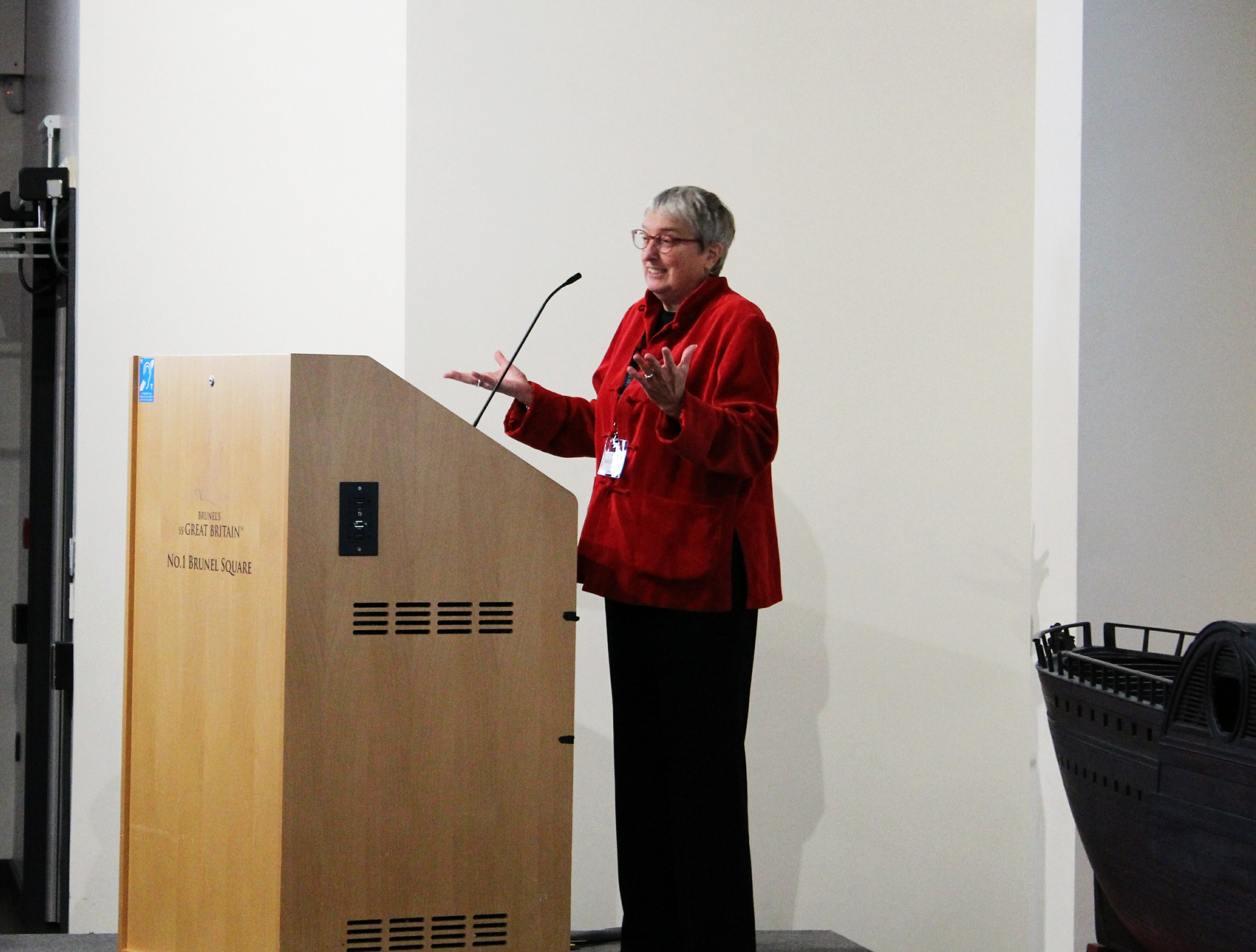
    We can’t believe it’s already been one week since our SWDTP Student Conference at Brunel’s SS Great Britain.

    Thank you to all of our wonderful presenters, attendees, keynote speakers and committee members for making it a memorable occasion!

    Don’t forget- if you’d like to join the committee for the 2019 Conference, get in touch with the SWDTP Hub!

    It was a busy day, so to jog your memory, why not flick through the short photo album below? And remember to watch out for the SWDTP Student Conference 2018 Video!

    [siteorigin_widget class=”SiteOrigin_Widget_Slider_Widget”][/siteorigin_widget]